





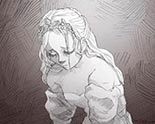
In Slay the Princess you start with a knife, a locked cabin, and a voice in your head insisting the woman chained inside must die before dawn — which matters, because almost nothing the game tells you afterward can be fully trusted.
The Narrator frames your task from the opening minutes, and his description of the Princess as a monstrous, world-ending threat sets expectations that the rest of Slay the Princess spends its runtime complicating. Each playthrough loops back to the cabin after a resolution, but the Princess and the surrounding path change based on choices from the previous loop, meaning no two routes through the story look identical.
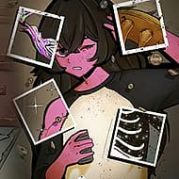
New players commonly assume the “correct” playstyle is either always killing the Princess or always sparing her, expecting one clean moral path. That’s a misread of the structure — the game actively punishes rigid consistency by evolving the Princess into different personas, from the Nightmare to the Adversary to gentler forms, depending on the specific combination of choices made across loops.
The internal voices that argue with the Narrator — figures like the Skeptic, the Paranoid, and the Cold — accumulate as you make choices reflecting their worldview, and by mid-game they actively debate each other inside your head during key decisions. Managing which voices dominate becomes as important as anything happening with the Princess herself.
Early loops mostly test whether you’ll trust the Narrator at face value, and most first-time players do, since he’s the only consistent guide the game offers. Once you reach a loop where the cabin’s layout visibly breaks — walls shifting, the chain looking less like a chain — Slay the Princess signals it’s moving past the setup phase into territory where the Narrator’s reliability is directly in question.
The Long Quiet ending and other combined-form resolutions are frequently cited by players as the emotional high points of the game, since they require specific voice alignments across multiple loops rather than a single dialogue choice. Reaching them without a guide typically takes several full runs, and players in community spaces openly compare notes on which voice combinations lead where.
A detail that only lands once you’ve actually sat through multiple loops: the cabin door’s creak changes pitch subtly between routes, a small sound cue that longtime players use to gauge which version of the story they’ve landed in before any dialogue confirms it.
Players who gravitate toward narrative-first games tend to chase every ending for the sake of the writing itself, while those who came in expecting a horror game are sometimes caught off guard by how much of Slay the Princess is dialogue-driven rather than reflex-based.
A recurring point of debate is pacing in the middle loops, where some players feel the game repeats structural beats — waking in the cabin, meeting the Princess, choosing a path — more than the writing quality justifies. It’s a reasonable complaint, though most agree the variation in the Princess’s dialogue across forms keeps individual loops from feeling identical even when the skeleton repeats.
The game has multiple distinct endings tied to specific voice and persona combinations, including violent, romantic, and transcendent resolutions, with the exact number expanding through post-launch content updates.
They directly influence which persona the Princess takes on in future loops, meaning voice dominance is a real mechanical driver of the plot rather than cosmetic commentary.
By the time a loop ends with something other than a knife, Slay the Princess has usually made its real argument: that the Princess was never a fixed threat to begin with, only whatever the Narrator and your own accumulated choices needed her to be.