




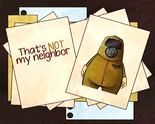

Someone is knocking, claiming to be the resident of Apartment 4B, and their entry request looks fine at first glance — but in That’s Not My Neighbor, “looks fine at first glance” is exactly the trap the doppelgangers are counting on.
| Genre | Job simulation, horror puzzle |
| Platform | PC |
| Release Year | 2024 |
| Core Mechanic | Compare resident documents and appearance against dossiers to spot disguised doppelgangers |
You work the front desk of an apartment building in 1955 on behalf of the Doppelganger Detection Department, and every visitor hands over an ID and an entry request that need to match dossier records kept in the folder to your lower right. Beginners tend to check only the photo against the visitor’s face and skip the finer print — apartment number, whether the name appears on today’s expected list — which is exactly where doppelgangers slip through.
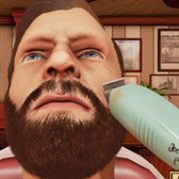
Doppelgangers can’t fully replicate human anatomy, and their tells range from obvious to genuinely subtle: an extra eye, a nose in the wrong position, proportions that are just slightly off. Early rounds tend to throw the obvious cases at you, but as you progress through Campaign Mode the mistakes shrink to details you’ll only catch by actually stopping to look rather than rushing the approval.
The phone is the tool players undervalue most starting out. Calling the apartment of a visitor’s supposed spouse or roommate can confirm or contradict their story on the spot, and once you’re deep enough into a shift that documents alone stop being reliable, that phone call becomes the tiebreaker that separates a clean pass from a fatal mistake.
Nightmare Mode swaps regular neighbors for a rotating cast the community calls Nightmares, and it removes a lot of the safety net regular mode gives you, with faster visitor turnover and doppelgangers that mimic more convincingly. Players who’ve cleared regular Campaign Mode often describe Nightmare as a completely different pacing challenge, since the checklist habits that worked at a relaxed speed start causing costly hesitation once the clock tightens.
Chester, a recurring figure players quiz for hints and lore, is frequently mentioned in walkthroughs and forum threads, since his responses hint at the deeper D.D.D. structure without ever fully explaining it. Getting his questions right is less about mechanical skill and more about having paid attention to details scattered through earlier shifts.
One thing that only becomes obvious after several shifts: doppelgangers who are already impersonating a tenant currently at home will contradict themselves the instant you call that apartment, since the real occupant answers — a specific interaction players discuss as one of the most satisfying “gotcha” moments the game offers.
Some players feel later Nightmare Mode runs lean too heavily on split-second visual details that are easy to miss even with full attention, arguing it shifts from observation skill toward reflex guessing. It’s a reasonable complaint, and even fans of the tense pacing generally agree a handful of doppelganger types require near-pixel-level scrutiny that feels closer to luck than deduction.
You cross-reference their ID and entry request against the dossier, check their face and proportions for anatomical errors like extra eyes or misplaced features, and place a phone call to their listed apartment if anything feels inconsistent.
In most game modes you’ll be killed at the end of the shift once a doppelganger you approved is revealed, and the results screen marks the run with a lowered rank and visual indicators of the failure.
Whether you’re grinding Campaign Mode for a clean S rank or just trying to survive one shift of Nightmare Mode without a fatal approval, That’s Not My Neighbor keeps its horror rooted in paperwork and paranoia rather than jump scares, and that restraint is exactly why the doppelgangers still get past attentive players.