








How far would you actually go for $25,000 when the man in the roadside stall keeps smiling and offering a dollar per click? BLOODMONEY: Requiem asks that question again with a fully remade version of the original booth and a new Requiem storyline layered on top. The hook is the same moral clicker, but the rebuilt art and extended campaign make every escalation hit harder, and the endings you unlock depend almost entirely on how far up the shop ladder you are willing to climb.
You play someone struck with a serious condition that needs a $25,000 operation, and Harvey Harvington is offering a deal that sounds too good: one dollar for every click on him. Early clicks feel harmless, almost silly, and Harvey stays cheerful, encouraging and oddly generous. That brightness is deliberate bait, because every tool you buy afterward raises the payout by making each click hurt him more.
The core mechanic is clicking plus purchasing. Money buys tools from the shop, tools multiply earnings, and the question is never whether you can reach the goal but how much harm you accept on the way. The famous double-or-nothing pitch, from $1 to $2 to $4 to $8, is the game’s thesis in a single line.
Horror fans who expect jump scares tend to be surprised that the dread comes from Harvey’s reactions rather than monsters.
The shop is the real difficulty curve. Tools are ordered so that each one pays more and costs more of your conscience, and the community refers to it simply as the ladder. Knowing where each step sits is the difference between the ending you wanted and the one you earned by accident.
The mistake almost everyone makes on a first run is buying Scissors just to speed things up for a moment. There is no undoing it, and the Good ending locks the instant that purchase goes through.
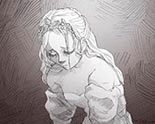
Returning players spot the new art immediately: Harvey is drawn cleaner and more expressive, which makes his early optimism feel warmer and his later collapse far more uncomfortable. The remake also shifts the tone of small moments, like the way Harvey reacts to the first Feather clicks, so even veterans of the original booth feel slightly off-balance.
The remastered booth keeps the classic outcomes. To get the Good ending, you hit the $25,000 goal while your highest purchase stays at Hammer or below. Feather-heavy clears read as the most bloodless in the narration, while Needle and Hammer clears still count as Good but soften the praise.
Normal and Bad sit further up the ladder, and the difference is how much escalation you pushed through before reaching the goal. Full escalation strips away Harvey’s mascot energy entirely, and depending on timing his reactions shift to begging, bitterness or worse.
There is also a fail state separate from the story endings. During the Knife phase, Harvey can interrupt, and missing the reactive click ends the run on the spot, which the community treats as its own outcome rather than a Bad ending.
The new storyline adds its own set of landings, usually labeled Good, Neutral and Bad in player showcases. These sit on top of the booth rather than replacing it, which is why many players finish the remastered booth first and only then dive into Requiem. The writing here is the part people quote most, and several lines from the phone call endings have become fandom talking points.
Secret routes exist as well. The Bee and Weird endings reward players who experiment instead of optimizing, and finding them usually requires unusual choices that a speed-focused run would never try. Completionists should expect several full replays.
By the time you reach the Requiem campaign’s final choices, the question of what Harvey Harvington deserves feels far heavier than it did in the booth. That weight is exactly what the remake was built to deliver.
Some of the story assumes you know the earlier titles in the series. It is fully playable without them, but a few character moments land differently if you already know Harvey’s history, and players regularly recommend catching up on the previous games for context.
The most common complaint is audio: dialogue and subtitles do not always line up, and some screams are loud enough that players warn others not to play at full volume. Others needed a little time to adjust to the new art style after the original’s look, although most say it clicks within ten minutes.
The deeper debate is about the writing. Some players feel the Requiem script hits exactly as hard as intended, while others found parts of the call endings confusing enough that the writing team addressed it publicly. That split is healthy for a story-heavy horror game, and it keeps ending discussions alive.
Streamers love the format because chat can vote on how far to go, turning the moral dilemma into a group decision.
A clean run is less about speed and more about discipline. The fastest safe route is short and predictable:
Advanced players who want the best narration stay on Feather as long as possible, accepting a slower run in exchange for the most bloodless wording at the end. It is slower, but the ending text is noticeably kinder.
Reach the $25,000 operation goal while never buying anything above Hammer. Feather, Needle and Hammer are all safe, but touching Scissors even once locks you out of the Good outcome for that run.
During the Knife phase Harvey can interrupt, and missing the reactive click ends the run immediately. This fail state is tracked separately from the Good, Normal and Bad endings, so you need to reload if you still want a story ending.
No, the remade booth and the Requiem campaign stand on their own. Still, Harvey Harvington’s history and some campaign lines make more sense if you know the earlier entries, so many players treat them as optional background reading.
BLOODMONEY: Requiem turns a simple clicking deal into a test of restraint, where the gap between Hammer and Scissors decides who you become by the time the $25,000 is counted. Play it once for the booth, once more for the Requiem campaign, and pay attention to Harvey Harvington’s face at every step of the ladder.