







Grain in Dressmaker is not a cosmetic detail: whether you align a pattern to the grain or cut it on the bias decides what appears on the final dress. That one fact tells you what kind of cozy crafting game this is, one where every stage from choosing fabric to feeding it through the sewing machine has a real effect on the garment you hand to a customer.
| Genre | Cozy crafting simulation |
| Platform | Windows PC and Mac |
| Mode | Single-player |
| Fabrics | Cotton, linen, wool, silk, velvet |
| Core loop | Sketch, cut, sew, decorate, deliver |
| Achievements | 32 |
Every dress begins as pattern pieces that you arrange on fabric and cut out yourself. Where you place each piece matters, because the direction of the weave shows up in the finished garment. A pattern aligned to the grain looks and hangs differently from one cut on the bias, and the game shows you that difference instead of hiding it behind a menu.
Beginners tend to treat cutting as a quick step before the “real” sewing. That is the most common mistake. Rushing the layout means the dress you preview on the mannequin will not look like the one you sketched, and by then the fabric is already cut.
Anyone who has sewn in real life will notice how closely the game follows real dressmaking logic, and that familiarity is a large part of its charm.
You do not pick one fabric for a whole dress. You choose the fabric for each panel of the garment, which turns every commission into a small design puzzle. Buying from a wide range keeps the choices interesting, and the fabrics you can stock are:
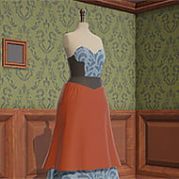
Mixing fabrics across panels is where the game rewards imagination. A customer’s taste and the event they are dressing for should guide your choice, so a dress for a ball and one for a quiet afternoon call for very different fabric decisions.
The sketchbook is where you plan all of this. You design and color your dress there, adding fabric samples and appliqué before you cut anything, so players who love to design will spend real time on this page.
The sewing machine is the heart of the workshop. It comes with an infinite bobbin, so you never stop to rethread, and you feed the fabric through by hand to stitch the panels together. That hands-on approach gives sewing a tactile feel that most crafting games skip.
It is only fair to say that it can feel fiddly at first. Guiding fabric through in a straight line takes practice, and players often mention needing patience during their first few dresses. The learning curve is gentle, but it is real, and it is part of why finishing a clean seam feels so satisfying.
Once the panels are joined, the dress starts to look like a garment. Players who play for relaxation will find that the steady rhythm of sewing is exactly what the cozy tag promises.
Decoration is where the dress becomes yours. You can add buttons, bows and appliqué wherever you like, along with lace trims and other accessories. Nothing forces you to keep it simple, and nothing forces you to overdo it either.
Because customers arrive with individual tastes, decoration is often what separates a passable dress from a memorable one. A single bow in the right place can change how a plain panel reads, and a poorly chosen trim can undo careful cutting.
A reasonable approach is to decide on your decoration in the sketchbook first, then match it to the fabric. That way the finished dress feels planned instead of piled on.
A whole town of people wants custom-made dresses for important events and their own tastes. You turn in your finished dresses to gain both reputation and coin, and those two rewards feed each other. Early in the game, simple commissions build your standing, and as your reputation grows the requests become more demanding.
The store page also hints at a mischievous side: you can satisfy townsfolk or sabotage them. That gives the game a sense of humor that many cozy simulations lack, and it makes each commission a small choice about how kind you want to be.
Not every player will use that option, but knowing it exists changes how you read each customer’s request.
You are not limited to commissions. You can display your own designs in the shop window and sell pre-made dresses off the rack, which lets you turn leftover creativity into steady coin. It is a natural second income once you know which styles suit the town.
Reception has been warm, with 98% of 3,538 English reviews positive on Steam, and the game carries 32 achievements for players who want to explore every corner of the workshop. Some achievements use pun-heavy names, in keeping with the game’s light tone.
And yes, there is a kitty, and yes, you can pet it. It does nothing for your reputation, and it is one of the best parts of the day.
Dressmaker turns sewing into a slow, satisfying puzzle, from the first cut on the grain to the last button on a velvet panel. If the idea of sketching a gown, stitching it at your own sewing machine and handing it to a townsperson appeals to you, this workshop, and its kitty, will feel like a warm place to spend an evening.