






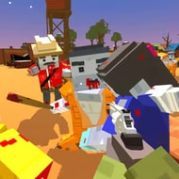
Zombie Siege Outbreak looks like a generic wave shooter from the loading screen, another pile of low-poly zombies and a starter pistol. It plays like a genuine defense game with ten separate zones pulling your attention in different directions, and running out of ammo mid-wave with three zones still exposed is where the “just shoot everything” first impression falls apart fast.
| Genre | Wave-based zombie survival shooter |
| Objective | Defend 10 zones across escalating zombie waves |
| Weapons | Guns, pistols, axes, grenades, flamethrowers |
| Currency | Coins earned per zombie kill, spent on weapon upgrades |
Most zombie wave shooters funnel you into a single choke point. Zombie Siege Outbreak instead spreads the pressure across ten distinct places that all need protecting, and the fate of the other survivors your character is defending rests on how well you split attention across them rather than how fast you can clear one lane. New players consistently make the mistake of camping the loudest, most visibly overrun zone while a quieter one gets breached entirely unnoticed.
Learning to read which zone is actually at risk versus which one just looks chaotic takes a few full runs. Zombies don’t announce a breach clearly — a player has to develop a habit of rotating attention across all ten positions rather than reacting purely to on-screen noise.
Every kill in Zombie Siege Outbreak pays out in coins, and that currency is the entire backbone of progression — better guns, grenades, and flamethrowers all sit behind a coin wall that only grows more expensive as the waves intensify. Early on, a starter pistol is enough to keep pace, but by the third or fourth wave, ammo scarcity turns into the real threat, more so than the zombies themselves.
Early in the game, a single wave might send a handful of zombies at one or two zones, giving a new player time to learn positioning without much real pressure. By the time you reach the mid waves, that pacing disappears — multiple zones come under simultaneous pressure, and the coin economy that felt generous in wave one starts to feel tight against the upgrade costs needed to keep up.
Ammo management becomes the actual skill being tested past this point, not aim. A player with perfect accuracy but no ammo discipline runs dry exactly when a wave needs sustained fire the most, which is why axes and grenades exist as fallback options rather than afterthoughts.
The short gap between waves in Zombie Siege Outbreak isn’t just a breather, it’s the only real window for correcting mistakes made during the fight before. Coins earned mid-wave sit idle until that gap, and players who spend it immediately on whichever weapon feels most urgent tend to do worse than those who glance across all ten zones first and buy upgrades based on which zone actually struggled, not which one felt scariest in the moment.
This is also when flamethrower and grenade purchases pay off best — buying them mid-fight wastes the window where they’d matter most, while buying them in the gap means the very next wave opens with a zone-clearing option already in hand instead of arriving one wave too late.
Beyond raw weapon upgrades, Zombie Siege Outbreak lets a player lean into a specific playstyle rather than spreading coins evenly across every option. Some players commit hard to a flamethrower-and-grenade combo built entirely around zone-clearing bursts, while others stay close to a reliable rifle and axe pairing that trades burst damage for consistency across a longer session. Neither approach is objectively correct — it depends on whether a player would rather manage risk zone by zone or accept a slower, steadier defense across the whole map.
The most common criticism aimed at Zombie Siege Outbreak is that the ten-zone structure can feel more stressful than strategic once several zones come under pressure at the same time — there’s an honest argument that the game asks players to be in more places than is realistically possible, especially before upgrades open up faster movement or wider-area weapons. It’s a fair critique, and one that shapes a lot of early frustration before players adjust their expectations around triage rather than full coverage.
What keeps people playing through that frustration is the escalation itself — the game gives you just enough coin income to feel like catching up is always possible, even in a wave that’s clearly gone sideways, which is the kind of tension survival-shooter fans specifically look for.
Zombie Siege Outbreak rewards the player who treats those ten zones as a triage problem rather than ten separate fights to win outright — every coin spent on the right upgrade at the right moment is what turns an overrun map back into a defensible one.