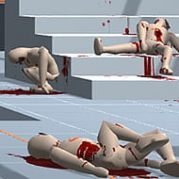
You send Carl off the top of the Vertical Impact Test Site, a drop of up to 16 m, and in Project C.A.R.L the way he lands depends on his skeleton, organs and blood flow rather than a canned animation. No two falls play out quite the same, and that unpredictability is the whole appeal of this injury-simulation sandbox.
| Genre | Physics sandbox simulation |
| Focus | Detailed injury and blood simulation |
| Weapons | 6 weapons and a physics gun |
| Maps | The Lab and Vertical Impact Test Site |
| Status | Demo, still in development |
Carl stands for Clinical Assistant for Research and Learning, and the premise is bluntly stated: he exists to help researchers find out what happens when you shoot him in the head or throw him off a tall ledge. That framing sets the tone for the whole game, which treats Carl as a test subject inside a clinical setting rather than a character with a story.
The real draw is the depth underneath. Carl has a fully detailed skeletal system along with organs and vascular systems, so his reactions are totally dynamic instead of scripted. Blood spray, splatters and pools are all simulated rather than faked, which gives every shot a different outcome.
The stated goal is to build a fully dynamic injury and reaction system, then wrap a real game around it. Right now it is a sandbox, and fans of physics toys will feel at home. This is graphic material, so it is clearly aimed at adults who enjoy the technical side of ragdoll experimentation.
The demo includes six weapons and a physics gun, and each weapon has its own system for interacting with Carl. A 308 behaves differently from an AK, and an AK behaves differently from the pistol, so swapping weapons is the main way to see how deep the simulation goes. Early in the game, the best habit is simply to fire the same shot with different guns and compare the results.
The physics gun is the tool for handling objects and setting up scenes. Many beginners blast away without any plan and miss the point, while patient players stage a scenario first and then watch it play out. Treat each test like an experiment and the sandbox becomes far more rewarding.
Ragdoll experimenters will love the variety, and slower, more methodical players tend to appreciate the way each weapon leaves its own signature on Carl.
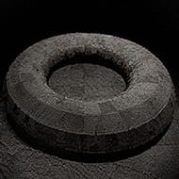
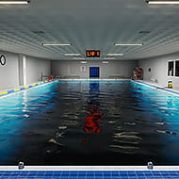
The Lab. This is a small, single-level testing area, which makes it the best place to learn how each weapon behaves. The space is compact, so you can see the effects of each shot without distractions.
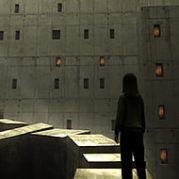
Vertical Impact Test Site. The second map is built around a drop that reaches 16 m, plus a ramp and plenty of objects to experiment with. It is where Carl’s fall reactions really shine, and many players spend more time here than anywhere else.
Where to start. New players should begin in The Lab, learn the weapons and then head to the drop. Jumping straight into the tall map can feel overwhelming before you understand how the simulation reacts.
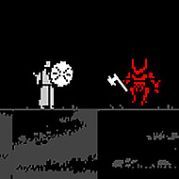
Besides the sandbox, the demo ships with one game mode: a zombie wave survival shooter. It is simplistic at the moment, and the developer included it mainly to show that the game will not stay strictly a sandbox. If you want clear objectives, this is the only place to find them right now.
The plans for the full release go much further. The developer talks about real gameplay loops such as CQB, Carl Fights and small minigames, along with more maps, more toys and more things to do. The sandbox is promised to stay, so the final game should offer both free experimentation and structured play. Once the novelty of the physics fades, those loops are what will decide whether players stick around.
For now, anyone expecting a full campaign should lower expectations. This is a showcase of systems, and the honest take is that the zombie mode is more of a teaser than a main attraction.
Modding is a major selling point for the long term. It will be fully supported when the game arrives on Steam, though it is restricted in the demo. That is good news for players who like to add their own maps, contraptions and weapons.
The demo ships as feature complete, so it will receive only minimal updates such as fixes for annoying bugs. New features and mechanics go to a private tester branch while the full release is prepared. Players who want to follow progress can join the community Discord, where the developer collects bug reports and suggestions and has a track record of acting on them.
That approach suits players who enjoy being part of the process. It is less ideal for anyone who prefers to wait for a finished product before playing.
The most debated topic is the use of AI. The developer is open about using AI for the code, while the sound, art and models are made by humans. That transparency is appreciated by some players, but others reject AI-assisted code on principle and will skip the game as a result. Neither reaction is unreasonable, and the community discussion is easy to find.
The content itself is another dividing line. The injury and blood simulation is intentionally detailed and violent, which is exactly the point for some players and a firm no for others. Anyone sensitive to graphic material should think carefully before starting.
The sandbox-only nature is the final concern. Fans of pure physics toys are happy, while players who need goals feel the demo is thin. Both views are fair for something that is still a work in progress.
Project C.A.R.L is a promising physics playground built around Carl, whose skeleton, organs and blood make every test in The Lab or at the Vertical Impact Test Site feel different. If detailed injury simulation and sandbox tinkering appeal to you, the demo is a solid place to see where the full release is heading.