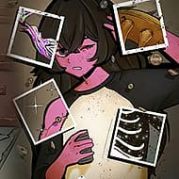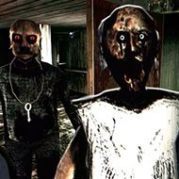
The Faceless in COST OF TRUST do not look like monsters, and that is the whole problem. You sit inside a reinforced booth at an isolated checkpoint, and the people begging outside the glass look almost human, speak like us, and know which words will make you hesitate. Your job is to manage the queue, verify each visitor, and decide who enters the safe zone while a counter ticks down. This short job-horror simulation turns a simple yes-or-no decision into a constant test of nerve.
| Genre | Job-horror simulation |
| Perspective | First person, from inside the booth |
| Platforms | Browser and Windows |
| Playtime | About 10 to 20 minutes per playthrough |
| Controls | Mouse for the terminal, A and R as decision shortcuts |
Everything runs through a diegetic terminal with a minimal interface, so you feel like a booth operator rather than a player staring at menus. A visitor arrives, you read what they say, inspect them for anything off, and then choose to allow or reject. The mouse handles every terminal button, while the A key allows and the R key rejects, which matters a lot when the timer is running. A full playthrough lasts roughly 10 to 20 minutes, so the game fits easily into a single sitting.
Pace is the point. Hesitation costs both money and lives.
Early in the game the checks feel forgiving, but each shift adds a new kind of anomaly to learn. Shift 4 introduces the non-breathing creatures, which is where careless players usually start to slip, and that gradual teaching is what keeps the pressure rising without feeling random.
The Faceless copy human emotions, and their dialogue is written to make you doubt your own judgment. The anomaly checks are unforgiving: you read what the visitor says, look for unnatural details, and identify the mimics before the timer runs out. Bits of lore are told through the people in the queue, so the dialogue is also where the story hides. Fans of horror games about suspicious neighbors and document-checking jobs will recognize the tension immediately, since players often compare it to That’s Not My Neighbor and Papers, Please.
Details beat feelings. Trust what you see on screen, not how sympathetic a plea sounds.
The game’s own advice is not to let empathy get you killed, and that is the mistake most first-timers make. Some players also say they sometimes cannot tell what was wrong with a visitor and would like an on-screen hint, while others enjoy that uncertainty as part of the horror.
Every correct decision earns the money you need to survive, and every mistake pushes you closer to being fired. The practical lose condition is simple: if your money drops below 0, the run is over. Because hesitation also costs money, rejecting everyone is not a safe strategy, since turning away real people counts against you just like letting a mimic through does.
Honest criticism is worth knowing about. Players say the consequences are not laid out clearly, and some would prefer punishments more creative than losing cash.
That feedback is part of why the game feels so short and sharp. A run is brief enough that a failed shift never feels like wasted hours, and you can jump straight back in to try a cleaner pass through the queue.
Visitor queues are randomized, so no two playthroughs show you the same sequence of faces. Pressure escalates as you go, which is why a run that felt easy on one attempt can fall apart on the next. That unpredictability is what drives the replay value, and it also means memorizing a single pattern will not carry you through.
The visual style leans on a retro PlayStation look with claymation-like characters. Players describe it as eerie in a way that clean modern graphics rarely manage.
Within the first two minutes you notice how the grain and the stiff, clay-like faces make every visitor feel slightly wrong. That unease is deliberate, and it gives your anomaly checks an extra layer of doubt even when a visitor turns out to be perfectly human.
New operators tend to rush, and rushing is what the timer is designed to punish. A calmer routine works better, and it only takes a few shifts to build:
Another common habit is trusting the first impression. The Faceless are built to sound convincing, so a polite, emotional visitor deserves the same scrutiny as a strange one.
Once you stop reacting to emotion and start checking facts, the booth becomes much more manageable. Even then, mistakes still happen, and that is exactly why the game keeps pulling people back for one more shift.
COST OF TRUST works best when you treat every plea at the glass as a puzzle instead of a plea. Keep your finger over Allow and Reject, protect your money, and by the time shift 4 brings the non-breathing creatures you will know whether you can really tell the Faceless from the people who need the safe zone.