










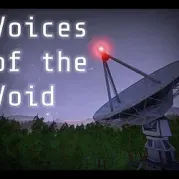
You drag the three coordinate radars into a tight triangle, press Enter, and somewhere past the concrete walls the satellite dishes grind toward a patch of sky nobody at the Alpen Signal Observatorium has logged before. That slow mechanical groan is the heartbeat of Voices Of The Void Alpha, a first-person signal-hunting sim where you play Dr. Kel, a fresh hire posted to a lonely research base in the middle of a forest. On paper the job is office work: find signals, download them, process them, store them on drives and ship them off. The game makes that routine tense by wrapping it in hunger, failing equipment, dark woods and neighbours who are very clearly not human.
| Genre | Horror, simulation, survival |
| Platform | PC (Windows) |
| Player role | Dr. Kel, signal researcher |
| Story mode length | 45+ in-game days |
| Unique signals | 200+ |
| Main vehicle | ATV |
Each morning begins at the computer table with the emails tab. That is where your supervisors post daily tasks, usually a request for a specific kind of drive, and hitting those requests exactly pays a bonus on top of whatever you earn selling drives. Points are the only currency that matters here. They buy food, blank drives, tools, upgrades and eventually companions from the store, and almost every decision in the game comes back to how fast you can turn signals into points.
Then there are Dr. Kel’s own meters, which drain whether or not the work is going well.
Hunger and stamina are the two that catch new players off guard. The starting stock of burgers and MREs runs out quicker than expected, so grabbing a crowbar and cracking the crates scattered around the base for extra rations is a smart early move, and shrimp from the store are a cheap way to stay full. Sleep is handled in the bed, and a coffee machine becomes a quality-of-life purchase once you get tired of losing whole evenings to rest. Players who enjoy management sims usually settle into this loop fast and start optimising the route between the computer table, the fridge and the drive box like a shift worker shaving seconds off a commute.
The Coordinates panel is the first terminal at the table, and it is where every signal starts. You sweep the sensor across the map until a signal shows up, box it in with the three radars and ping it. A successful ping sends the dishes moving, while errors like satellites being active or a weak, empty reading mean you try again. The classic beginner mistake is pinging a second target before the first finishes downloading, which simply deletes the earlier signal instead of queueing it.
Signal level is what separates a lean week from a comfortable one. Higher levels generally sell for more, although a few signals turn blank when upgraded and end up worth little or nothing, which is a painful lesson the first time it happens. Veterans keep a backlog of raw signals on spare drives, because once processing tiers open up those copies can be pushed higher for extra points or saved for a future daily request.
A small trick most people only learn from the wiki: switching off every component except Downloading makes signals come in noticeably faster, since the Playback panel and the rest are pulling power and attention you do not need mid-download. Completionists chasing all 200-plus signals end up living at this table, and for them that toggle alone saves hours across a long save.
Power for the whole base comes from three transformers around the array, and the more devices you leave running, the faster they drain. Flickering lights are the first warning. If the power refuses to come back on at all, one transformer has gone down, and the fix means walking or driving out to the transformer root and looking for the red lamps that mark the dead units. Typing tr.check into the console lists every transformer’s charge, which saves a lot of guesswork.
The satellites are their own chore. They are named with the phonetic alphabet, and running sv.ping in the console shows which ones have broken, so you will be driving to Victor or Romeo far more often than seems reasonable. The community joke about fixing Romeo for the tenth time exists for a reason. A Server Repair Kit slotted into the CD repair drive fixes a downed server instantly, though that route does not earn points.
The ATV makes all of this bearable. F toggles its light, Shift boosts, and letting off the throttle on downhill stretches saves fuel. The solar upgrade only charges when the vehicle is actually parked in direct sunlight, which confuses more people than it should. Early in the game you navigate by following cables through the trees; later the digital map marks transformers directly and the trips get far shorter.
There is a specific feeling every player recognises: sitting on the ATV at a dish deep in the forest when the distant base lights stutter and die, leaving nothing but the headlight and the hum of the engine. It is the moment the game stops feeling like a sim.
Kerfur is the robot cat companion you can buy once points start flowing, and many starter guides treat it as a top-priority purchase because it helps keep the base in order while you work. It also has a habit of rolling up silently behind you when it finishes a job, which has made half the community jump. Petting it is allowed, but pet it too much and it explodes. Kerfur-Omega, a variant built with a plushie, can take far more affection before the same thing happens.
The Arirals are the neighbours, an alien species tied closely to the story, and your relationship with them is tracked by a reputation system that runs from -100 to 100 across five tiers: mean, inconvenient, normal, good and loyal. Once the Arirals start reacting to what you do, no two story saves play out quite the same way. Horror fans tend to love this part most, since friendly visits and unsettling ones can come from the same source depending on how you have behaved.
Not everything outside is negotiable. Wisps drift through the woods, ghost deer attack on sight, the Black Fog can roll in as a random event, and an entity called the Insomniac drags Dr. Kel into dream sequences if it catches him. Even Kerfur-Omega gets involved: save the signal named ker, go to sleep with Kerfur-Omega active, and its screen switches to a scary face as it races toward your sleep camera.
The opening days are slow, and the community is honest about it. Without upgrades, downloads crawl, points trickle in from cleaning the base and fixing servers, and the first real purchases take a while to afford. Some players find that grind meditative and exactly the point. Others bounce off before the first week ends, convinced nothing is happening, and never reach the stretch where events and signals start stacking up.
Stability is the other sore spot, which makes sense for an alpha. Softlocks, a lost ATV and updates that clash with older saves all come up regularly in forums, and the settings menu even includes reset options for upgrades, points, player stats and the ATV’s location for exactly those situations.
Tone splits people too. Alongside genuinely creepy signals, the game is full of jokes, from Maxwell the black cat to a trollface hidden in the rocks behind the locked bunker near the garage, plus a separate setting that enables sillier signals and events. Fans call it charm; players who came purely for dread sometimes feel the jokes puncture the atmosphere at the worst moments.
One of the three transformers has run dry or shut down. Run tr.check in the console to see which one, then head to the transformer root and look for red lamps. Turning off unused devices such as the Playback panel slows the drain and keeps it from happening again so soon.
For most players, yes. Kerfur takes some of the upkeep off your hands, which lets Dr. Kel spend more time at the Coordinates and Downloads panels earning points. Just keep the petting reasonable, and remember that Kerfur-Omega comes with its own scary-face event tied to the ker signal.
No. Endings and game-over scenarios, like the one triggered by mishandling a dangerous signal, send you back to your last save point instead of deleting the file. Saving before risky processing or late-night trips out to Victor or Romeo is still a good habit.
Voices Of The Void Alpha rewards the player who treats the Alpen Signal Observatorium like a real workplace: ping carefully on the Coordinates panel, keep all three transformers topped up, let Kerfur handle the small stuff and pay attention to how the Arirals feel about you. Get those habits right and the forest stops being a place you survive and becomes a place where the strange signals finally start telling their story.