Why would a phone flight simulator make you care about the exact moment you raise the spoilers? Turboprop Flight Simulator does it by treating every landing as a small procedure, and then it stacks cargo drops, rescue flights and seaplane work on top. The result sits somewhere between a relaxed sightseeing flight and a proper checklist exercise, depending on how much of the cockpit you choose to touch.
| Genre | Flight simulation with ground vehicles |
| Aircraft | Fourteen, grouped into five families |
| Ways to play | Training missions, regular missions, open flight, custom routes |
| Input | Tilt sensor, stick or yoke |
Most of the skill in this game hides in the seconds after the wheels touch the ground. Flaps, spoilers, thrust reversers and auto-brakes each take a different share of the stopping job, and the training missions introduce them in the same order a real pilot would use them: taxi first, then takeoff, then landing. Players who skip straight to the big cargo planes tend to learn the hard way that a heavy airframe does not forgive a rushed touchdown.
The tilt sensor deserves a mention here, because it is both the most natural and the most tiring input. Some pilots happily bank by tilting the phone, while others switch to an on-screen stick or yoke after one nervous approach.
Early in the game the goal is simply to arrive at a sensible speed and stay on the centerline. Later, once you start working short strips, you begin to read the runway length the way a driver reads a parking space. Cockpit cameras with captain and copilot positions help here, since the view from the left seat shows the runway edge far better than the chase camera does.
The fourteen aircraft are not fourteen unrelated planes, and the grouping tells you what each one is for. Choosing by job is the quickest way to find a favorite:
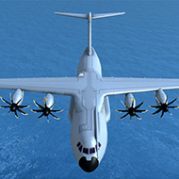
The MC-400, MC-130, MV-40 and MS-26 are the special operations variants, and they are where the more adventurous missions live. Aviation fans who care about realism usually stay with the RL-72 and the C-130, while players who just want something strange head for the tilt-wing XV-40 or the seaplane.
One detail that only shows up after a few flights is the sound. Turbine whine and propeller noise were recorded from real aircraft, so a RL-42 spooling up on the apron sounds different from a C-400 doing the same, and you start recognizing planes with your eyes closed.
Once the ramp of a cargo plane opens, the game stops being only about flying. You can load vehicles and supplies, unload them at the destination, drive ground vehicles out onto the strip and, with the right airframe, push supplies out the back during an airdrop. Players who enjoy logistics puzzles often find this the most absorbing part of the whole game.
A tidy cargo run follows a rough order:
The jet-assisted takeoff and landing system, written as JATO/L in the menus, is the answer to strips that would otherwise swallow a loaded airlifter. It is not a trick for everyday flying, and using it well means planning the approach so you are not relying on it as a rescue.
The rewarded ads are the loudest topic. There are no mandatory ads, only optional ones between flights that pay out tokens, and plenty of players are happy with that trade because no real money is needed. Others feel any pause between flights breaks the rhythm, and that disagreement shows up in reviews constantly.
The map and plane list come next. Reviewers keep asking for larger terrain, more civilian aircraft and airline liveries, and the several islands start to feel familiar after enough flights. The game answers with variety in time of day and measurement units, since speed, altitude and distance can be shown in metric, aviation standard or imperial.
Crash damage rounds out the list. Wing tips clip, wings separate, tails break and fuselages fail, so a sloppy approach can end with a lost wing. Beginners find this harsh, while physics enthusiasts say it is exactly why a clean landing feels earned.
The RL-42 is a good first pick after the training missions, since it is the smaller of the two regional airliners and teaches flaps, gear and approach speed without the weight of a loaded airlifter. After that, the C-130 is the natural step up.
Yes, in most levels and in open flight you can switch to first-person view and walk through the interior. You can work the doors, the cargo ramp, the strobes and the main lights yourself, which is especially useful on a C-400 or C-130.
Open flight lets you build a route on the map and fly it leg by leg. It is a good way to practice airport approaches on the islands without the pressure of a mission timer.
Turboprop Flight Simulator pays off most when you treat each flight as a small job: plan the route, load the C-130, drop the supplies and land with the spoilers and reversers working together. Learn that rhythm on the RL-42 first, and every other airframe in the hangar starts to make sense.