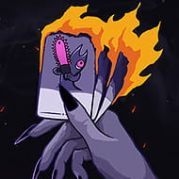
You sit down at the pentagram with five empty points, a score threshold waiting to be beaten, and a draw pile that charges a toll: every card you draw sends a random card from your hand into the fire for good. That is the bargain at the center of Burn With Me, and it lands before the Teacher has finished walking the occult students through their first ritual.
| Genre | Narrative deckbuilder with roguelike elements |
| Players | Single-player |
| Structure | Six chapters, each built around a ritual and a Personal Demon |
| Board | Pentagram with five card points |
| Signature mechanic | Permanent card burning |
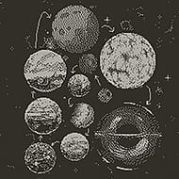
Every round asks for the same thing: fill the five points of the pentagram with exactly five cards and beat a score threshold that climbs as the chapter goes on. The count never changes, so you cannot flood the board or keep a spare in reserve. The real decision is which five cards go where, and that single constraint shapes every strategy this game supports.
Placement matters because cards and summoned creatures gain value from what sits around them. One creature might boost its neighbors, while another grows stronger when it faces a particular card across the board. Players who love spatial puzzles will feel the pull right away, since the pentagram reads more like a tactics map than a hand of cards.
Fans of Balatro-style scoring will recognize the chase for the threshold. The positioning puzzle on top of it is a different animal entirely.
At the start of each round the game offers three cards, and you pick one to add to your deck. Drawing is where the burning comes in: to bring a new card into your hand, you must burn one already there, and the card that goes is chosen at random. A burned card does not return to your deck for the rest of the run, apart from a few exceptions built into specific cards.
This is why players call it a deck-burner rather than a plain deckbuilder. Some cards gain extra effects when they burn, so losing them can work in your favor, and the best rounds come from planning around the fire instead of resisting it.
The finite structure is a quiet selling point too. Where Balatro-likes push toward endless runs and ever-rising scores, this game has a defined ending across six chapters, which suits players who want a story to finish rather than a run to optimize forever.
The most common mistake is treating the burn as a loss to avoid. New players hoard their strongest cards, then watch the random draw take one anyway. Since you cannot control which card burns, the safer habit is building a hand where no single card is irreplaceable.
On higher difficulty the score threshold rises, and three things start to decide the outcome: the cards you were offered, your starting hand, and the random card the draw forces you to burn. Skipping the card text early is a habit that gets expensive later.
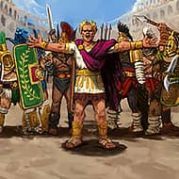
Each of the six chapters brings its own cast, cards, mechanics, and bosses, so the pentagram never plays the same way twice. Chapter one follows Alan, who has a demonic arm and wants his normal body back. Its cards lean on neighbor interactions, which makes it a clean lesson in placement before anything gets complicated.
The second chapter introduces cards that steal stats from other cards and cancel their effects, so the board stops being a quiet puzzle and becomes a negotiation. Players who like rules that keep changing under them will find this the first real jolt.
By the time you reach the third ritual, burning stops being a cost and becomes part of the plan. The phoenix is the clearest example: burn it, and it returns the next round with increased power. Once the phoenix appears, the whole deck looks different, because a card you were afraid to lose is suddenly one you want in the fire.
Every ritual ends with the summoning of a Personal Demon, and finishing it adds a new creature card to your deck. Deckbuilder veterans know that adding cards is a mixed blessing, because a crowded deck dilutes your best draws. This is the most discussed criticism of the game: winning an encounter can feel like a punishment when your deck fills with cards you never wanted.
Card abilities that thin the deck permanently are the answer, and they keep the pile manageable. Still, the random burn on every draw frustrates some players on higher difficulties, where one unlucky loss can break a hand that was planned across several rounds.
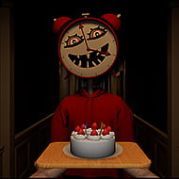
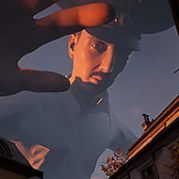
What keeps players coming back is the mood. The hand-drawn art is blended with live-action footage of the Hand, and the result is what the community calls cozy dread: warm, strange, and slightly wrong at the same time. The tutorial teaches the rules clearly, so the unease comes from the story rather than from confusion.
The story runs for six chapters, and each one centers on a ritual that ends with a Personal Demon. The demo covers the first chapter, where Alan’s demonic arm drives the plot, so it works as a fair sample before you commit. Each later chapter adds its own cards and boss.
For the run, yes: a burned card leaves your hand and does not return to your deck. The exceptions are cards designed around burning, like the phoenix, which comes back stronger the following round. Because the draw picks the burned card at random, planning for loss matters more than protecting any single card.
It shares the score-threshold chase, but the similarities end there. The pentagram forces exactly five cards per round, positioning decides how much each card scores, and the six-chapter structure gives the game a real ending. Players who want endless runs may miss that, while players who want a finished story will likely prefer it.
Burn With Me works best once you stop mourning every card and start treating the pentagram as a place where things are meant to burn. The Teacher’s rituals, the Personal Demon waiting at the end of each chapter, and the steady climb of the score threshold all push toward one lesson: power here is always bought with something you cannot get back.