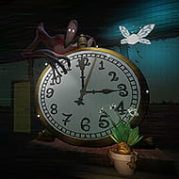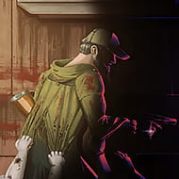









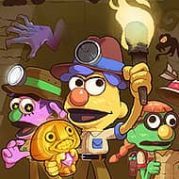
The gold idols in Too Deep To Quit are not a prize for the strongest player. They belong to whoever is still alive when the loot gets split. That single rule shapes this cursed temple crawl for one to four adventurers, where starvation, squashing walls and hungry locals all compete to remove you from the payout. It is a comedy co-op game, but it keeps the tension of a real survival run.
| Genre | Co-op survival exploration with comedy |
| Players | 1 to 4 |
| Perspective | First-person |
| Setting | Cursed temples packed with traps |
| Threats | Starvation, deadly hallways, creatures that slither, sting and bite |
| Prize | Gold idols and priceless artifacts |
Every temple is stuffed with the belongings of adventurers who arrived before you, and that wreckage is your supply line. The pitch tells you to check every dark corner for whatever keeps you breathing, which turns exploration into a constant scavenging loop. Early in a run you will mostly be improvising with what you can carry, and that sets the tone for the whole expedition.
Starvation is treated as a real threat instead of a flavor line, so food and useful scraps are worth more than they look. Survival fans will recognize the pressure of weighing one more room against a growing hunger, since every extra search costs time but might hold the item that saves a teammate.
Improvisation is the skill being tested here, not preparation. The temples reward players who look twice at a pile of junk and ask what it could become.
Hunger is slow, but the walls are not. Every hallway is described as a literal death trap, and the pitch jokes that the clumsiest member of your squad is the one most likely to trigger it. Because the game leans on physics, one misplaced step can turn a quiet corridor into a pile of friends, which is exactly where the comedy comes from.
Procedural generation means the temple layouts change between runs, so memorizing trap positions is not a long-term plan. Paying attention is. Fans of chaotic co-op will enjoy the shared panic, while players who want precise control may find physics deaths more irritating than funny.
Talking to your team matters more than any item you carry. A shouted warning before a doorway often saves a whole expedition from a bad ending, and a silent squad is usually a squashed one.
The forgotten temples double as a nest for anything that slithers, stings or bites, and the pitch makes clear that traps are only half the danger. The locals arrive when you are already low on supplies, which is the cruelest timing a survival game can offer. Creature encounters are meant to stack on top of hazards, so a fight in the wrong hallway can end a run twice over.
Public material has not yet laid out a full roster of creatures, and that is worth saying honestly. Players who want exact names and weaknesses will need to wait for community notes once more of the game has been explored.
By the time you push into the deeper rooms, expect overlapping dangers instead of clean one-on-one fights. The survival horror and action roguelike tags suggest that dying, learning and trying again is part of the design.
The tone is the first thing that separates this game from a grim temple survival run. The store tags call it funny and stylized, and the pitch talks about golden-age adventure, so the mood sits somewhere between an old treasure-hunting film and a slapstick sketch. Deaths are meant to be memorable, not just punishing.
That tone shapes how you play with friends. A squad that laughs at a squashing wall will usually restart faster than one that treats each loss as a failure, and the atmospheric stylized look keeps the temple interesting even after a few trips through it. Players who love co-op comedy get the most from this mix.
The balance is not guaranteed to suit everyone. Anyone who wants a serious, tense survival horror game may find the jokes distracting, and anyone who wants pure comedy may find the starvation pressure too sharp.
Deep within the ruins sit priceless artifacts and solid gold idols, and the entire pitch is built around survivors splitting the treasure. That makes survival the win condition. The deeper you push, the better the loot is likely to be, and the name of the game hints at the temptation to keep going when you should turn back.
The game supports one to four players, so solo runs and full squads are both possible. With a full squad, the warning to beware of everything and everyone adds a layer of suspicion, because a teammate who grabs the last gold idol is also a teammate who might get you squashed. Cautious players and greedy players will argue about when to leave.
Too Deep To Quit turns every extra step into a question about how much one more gold idol is worth. The cursed temple, the squashing walls and the artifacts you cannot bring home if you die all push you toward the same decision, and your friends will happily make it worse.