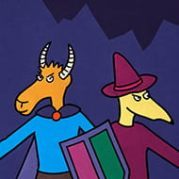
Blood in Click Clock is not a health bar and it is not a hazard, it is the currency that makes time itself run faster. That single swap turns an ordinary incremental loop into something stranger, because the thing you are clicking toward is time and the thing it costs is grim. The page sums up the pitch in a line about a ticking clock and the question of what you are waiting for.
| Genre |
Incremental, psychological horror |
| Perspective |
First-person, 3D |
| Players |
Single-player |
| Resources |
Time, blood, skulls |
| Core loop |
Click, build time makers, boost with blood, ascend, reincarnate |
Clicking the Clock and Making Time in Click Clock
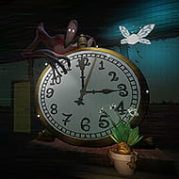
Everything begins with one action: you click the clock to produce time. That sounds like the oldest incremental trick there is, but here the clock sits inside a first-person 3D space, so the loop feels physical instead of living on a flat menu. Early in the game your clicks are the only engine, and every unit of time you produce becomes the seed for the first time makers you unlock. The Idler tag on the page tells you where this is heading, with production gradually taking over from your own hand.
Click, collect, spend, repeat.
Horror fans may be surprised that the opening looks closer to a calm sandbox than a nightmare. The relaxing and surreal tags sit right beside psychological horror, and that contrast is part of what the game is built on. It rewards players who are willing to sit with a quiet loop and wait for it to turn strange.
Time Makers, Blood Sources and the Boost Loop
Once the first time makers are unlocked, the game opens up into a layered economy. Time makers produce time, blood sources produce blood, and blood is spent to boost the time makers, which closes a loop between the two resources. A third resource, skulls, arrives as your accumulated time grows, and it feeds a longer game sitting on top of the short one.
Three things are worth watching as a run develops:
- How fast your time makers are producing compared with before your last purchase.
- Whether your blood sources are keeping up with the boosts you want to buy.
- How much time you have banked in total, since skulls come as time accumulates.
The honest sticking point is that blood as a currency makes spending feel uneasy. Idler veterans will enjoy the pure optimization of the boost loop, but anyone playing for atmosphere will notice that every upgrade carries a dark flavour.
Skull Talents and Reincarnation in Click Clock
Skulls are what stay when everything else resets. You acquire them as you accumulate time, then ascend to ignite skull talents, which are permanent. Reincarnating restarts the run, but you come back stronger than before. Reset-based progression is the backbone of most incremental games, and here it is framed as dying and returning, which suits the dark tone.
Put together, the features describe one repeating cycle. Learning it early is the fastest way to stop feeling lost.
- Click the clock to produce time.
- Unlock time makers.
- Acquire blood sources and boost your time makers with blood.
- Collect skulls as your time accumulates.
- Ascend to unlock skull talents, then reincarnate to restart stronger.
Completionists will settle into this cycle, since the page lists multiple endings among its tags and every reincarnation is another chance to push the loop further. Whether a reset feels exciting or like erasing your work is the second honest divide among players.
Clues Hidden in Your Space and Time
Beyond the numbers, the page asks you to explore your space and time to find clues. Its teaser line stumbles from asking who is there to correcting itself and asking what is there, which hints at something unseen sharing the room with you. That presence gives the incremental loop a reason to look up from the clock.
Mystery fans will want to look around between purchases instead of waiting passively, since the game promises that you uncover the mysteries of this world as you make progress. Progress in the numbers and progress in the story are meant to move together.
The quietest moment comes when production runs on its own and you have nothing left to click. A clock ticking by itself in a surreal space is exactly the kind of silence a horror tag can work with.
Where the Idle Loop and the Dread Pull Apart
Mixing a relaxing incremental loop with psychological horror will never please everyone. Some players want the soothing rhythm of numbers climbing and find the dread intrusive, while others came for the unease and find the clicking a delay between scares.
Clicking itself is the other divisive point. The name promises it, and long stretches of repeated clicks suit some players and tire others, which is why the way time makers take over production matters so much.
The Capitalism tag also invites a reading of the blood economy as commentary on what people trade for time. Whether that lands as clever or heavy-handed is up to each player.
Questions Idler Fans Ask Before the First Click
What is blood used for in Click Clock?
Blood is the currency that boosts your time makers, which makes your production of time faster. You acquire it from blood sources that you unlock as a run develops. It is the link that turns plain clicking into a loop of spending and growing.
What happens when you reincarnate?
You restart the run, but you come back stronger than before, because the skulls you gathered as time accumulated were turned into permanent skull talents when you ascended. The run resets, but the talents stay. That trade is the engine of long-term growth.
Is it a horror game or an idle game?
It is both, since the tags list Incremental and Idler alongside Psychological Horror and Surreal. You click the clock and build production like in any idler, while clues and a hint of something unsettling in your space add the horror. Expect the two to coexist rather than alternate.
Click Clock gives you one clock, three resources and a death-and-return structure, and the question it keeps asking is how much blood you are willing to spend on time. Build your time makers, chase the next skull talent, and see what waits in your space once reincarnation lets you return stronger.