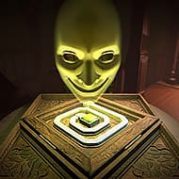










Terrible Lizards looks like a campy roadside dinosaur attraction, full of colorful mascots and uncanny animatronics, but it plays like a first-person chase where hesitation is the quickest way to lose. You arrive with a dead car and no phone, and the only way forward leads through a place that has stopped pretending to be a show. That mismatch between sunny Route 66 kitsch and relentless pursuit is what makes this horror game stick in the mind.
| Genre | Horror parkour |
| Perspective | First-person |
| Setting | Dalton’s Dinos, a Route 66 attraction in New Mexico, 1992 |
| Combat | None, no weapons |
| Story fragments | VHS tapes, notes, audio logs |
| Players | Single-player |
Everything starts at Dalton’s Dinos, a once must-see roadside stop baking under the New Mexico sun in 1992. Your car has died miles from anywhere, there are no cell phones, and the staff have vanished without a trace. The attraction is quiet at the wrong time of day, and you soon sense that the animatronic exhibits are not as still as they should be.
Then a telephone rings, and a mysterious voice begs you to help find a missing child. That call drives the story, because it gives you a reason to stay when every instinct says to leave. Players who love slow mystery will enjoy wondering whether the voice can be trusted, while players who want pure action get pulled along by the same call.
Early in the game the search for a missing child feels personal rather than epic. It eventually points toward the attraction’s missing owner and his son, which turns a simple rescue into something much darker.
Combat is not an option, so every answer to how you survive is a movement answer. You run, jump, climb, wall run, bounce and slide, and the game wants you to chain those moves into one smooth line instead of treating them as separate tricks. Parkour fans will see the appeal immediately, since a clean route matters more than quick reflexes.
Run: Your baseline speed matters most when creatures shamble or charge at you, because early distance is easier to keep than to rebuild.
Slide: Low gaps and tight passages become part of the route instead of a roadblock, so the slide is how you keep speed through them.
Wall run: Walls turn dead ends into escape lines, especially once the chase moves into the underground excavation.
Bounce: Bouncing off surfaces carries speed through awkward corners and gaps, which is what separates a scramble from a clean escape.
Above ground, the scares come dressed as nostalgia. Paleo Pal and the other colorful mascots smile at you from every corner, and the uncanny animatronics make the attraction feel like a theme park that closed in the middle of a bad day. The first time something moves among the exhibits, the cheerful decor turns from charming into suspicious.
Below the attraction lies a sprawling underground excavation, and that is where the game stops being a spooky walk and becomes a hunt. Mutated dinosaurs, mad scientists and possessed puppets share the dark with you, and the shift from bright mascots to caverns is the sharpest tonal turn in the whole story.
Once you reach the caverns, the creatures shamble and charge toward you, and a straight sprint no longer solves anything. Terrain, walls and gaps become your allies, which is where the movement toolkit finally earns its place.
The mystery is told through VHS tapes, notes and audio logs scattered around Dalton’s Dinos, and finding them is how you uncover what really happened to the staff. Reading and listening ask you to stop running for a moment, which is a deliberate trade, because every pause in the dark has a cost. Lore hunters will treat each tape as a reason to take a risk, while impatient players may skip them.
The storytelling is environmental rather than cutscene-heavy, so the truth builds from fragments. Each recording adds a little more to the picture of the ugly secret hiding beneath the attraction.
The demo reflects that split. It comes in two parts, a story-focused section and a gameplay-focused section that unlocks after the first, so you can see how the lore and the chase fit together.
Not everyone agrees on how Terrible Lizards should be played. Fans of slow, hide-and-wait horror may find a parkour chase too busy, because there is no weapon, no standoff and no quiet corner to hold. Fans of platformers, on the other hand, may feel the horror gets in the way of precise jumps.
The honest trade-off is that the fear comes from pressure rather than from surprise. When creatures shamble and charge, you are always moving, and mistakes snowball quickly.
Players who love the 1990s atmosphere, from the dead car to the total lack of cell phones, will forgive a lot, since the setting does half the work of selling the dread.
Terrible Lizards ends up being about trusting your feet in a place built to charm you, from the smiling Paleo Pal to the voice on the telephone asking for help. If you can accept that the dinosaurs in the dark will never be fought, only outrun, Dalton’s Dinos offers a chase worth surviving.