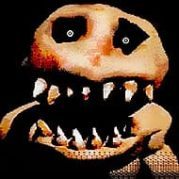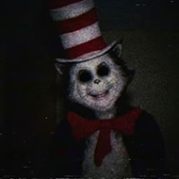
What happens when a quiet night alone in front of the television ends with you ordering the strangest product from the ad break? The Cat in the Hat (Analog Horror) answers that in the worst way possible: the package arrives, the house starts changing, and a distorted version of the Cat is suddenly somewhere inside with you. It is a short first-person story horror game that swaps a level menu for one continuous, escalating night.
| Genre | First-person analog-style story horror |
| Structure | One linear sequence divided into scenes |
| Main locations | The house and the maze |
| Key controls | Directional keys to walk, mouse to look, Shift to sprint in the maze, V to release the cursor |
| Goal | Survive the night and reach the good ending |
The opening minutes are deliberately ordinary. You follow objective messages on screen, walk up to objects until an interaction prompt appears, and move between rooms as new events unlock. The television gives you the information that starts the story, and the order you place is what pushes everything toward horror. Nothing chases you yet, which is exactly why the calm feels suspicious to anyone who knows the genre.
Rushing breaks the pacing far more often than it breaks anything else.
The classic beginner mistake is running ahead before the objective updates. Later doors and objects stay inactive until the story reaches them, so players wander the halls convinced they are stuck when the game simply has not caught up. During quiet stretches, checking every accessible room is the reliable way forward, and it also lets you notice the small changes the house is quietly making around you.
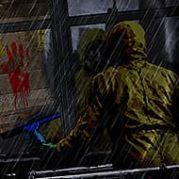
Once the delivery lands, the house stops being safe. Sound shifts, lighting changes, and objects are no longer where you left them, which is the genre’s favorite way of telling you something has moved in. Dialogue and scripted scenes carry the story forward, and sudden encounters with the Cat punctuate the exploration. Later sections also cut down the time you have to look around before something forces you to move.
One detail players always mention afterward is the moment they realize a familiar room has been rearranged behind their back. It is a small touch, but it lands harder than most jump scares because you walked through that room a minute earlier.
Story-first horror fans who love found-footage atmosphere will enjoy lingering here. Jump-scare hunters sometimes call the first half slow, and the most common complaint across the community is simply length: this is a single, fairly short night with no level select, so anyone expecting a long campaign walks away wanting more.
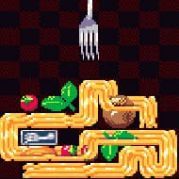
Near the end, the maze becomes the main escape challenge and the game switches from observation to direct pursuit. Here, choosing the correct route and keeping distance from the Cat matters much more than searching every corner. Hesitation at junctions is what gets most players caught.
Failure during a dangerous sequence restarts that part rather than the whole story. That makes the maze learnable: each attempt shows you a little more of the correct path, and after a few tries most players move through it with real confidence.
If an on-screen prompt needs the mouse, V releases the cursor for interface actions. It sounds minor, but players who miss it sometimes think the game has frozen during a menu moment.
The Cat in the Hat (Analog Horror) works because it keeps things simple: an ad on the television, a package at the door, and a Cat who turns an empty house into a trap. Take your time before the delivery, watch for rearranged rooms after it, and save your sprint for the maze, where the good ending is decided.