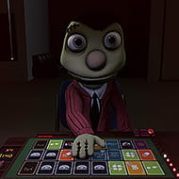
What actually happens when you flip a JERRY in Mr Magpie’s Harmless Card Game? The short answer is that a smiling puppet’s idea of a performance review goes badly wrong for you, and enough bad luck ends the run for good. Everything else about the game is built around making you flip anyway, because the cash and multipliers on the other side of the grid are far too tempting to walk away from.
| Genre | Roguelike deckbuilder, corporate horror |
| Mode | Single-player |
| Core loop | Flip cards for cash and multipliers, deduce where the JERRY cards hide, then cash out |
| Host | Mr Magpie, a puppet running a warped performance program |
| Between runs | Explore the workplace and shop in the supply closet |
Each round lays out a grid of face-down cards, and every flip either pays you or threatens you. Cash cards add to your take, multiplier cards scale it, and hint cards narrow down where the JERRY cards are hiding. The rhythm is closer to Minesweeper than to a traditional deckbuilder, with a payout that keeps climbing as long as you survive the next flip. Early in a run the grid feels forgiving, but the first time you stare at a half-solved board and realize two safe-looking cards cannot both be safe, the deduction side of the game wakes up.
The real decision is when to cash out. Players who love gambling mechanics will keep flipping toward a bigger multiplier, while more cautious players bank their earnings and move on to the next round. Neither style is wrong, but pushing your luck is what the whole structure invites, and Mr Magpie clearly wants you to try.
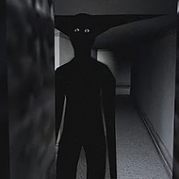
JERRY cards are the one thing you cannot afford to ignore. They are the murderous cards in the deck, and a framed commandment in the office warns you not to take the name in vain.
Hint cards are your only real information, and they do not always behave. Some point you toward safe cards, others describe where a JERRY sits relative to a card, and some are openly labelled as lies. Beginners tend to treat every hint as gospel, flip confidently, and lose a run to a card the hint never actually protected.
Good play means cross-referencing hints instead of leaning on a single one. When two hints agree, the card they point to is far safer than either suggests alone, and when they conflict, the lie label usually tells you which one to doubt. Minesweeper veterans will find this instinct familiar, and it is the skill that separates a lucky win from a repeatable one.
The deduction is not perfect, though. Some players complain about left-right JERRY hints that leave a pure 50/50 guess, and a run that comes down to a coin flip can feel unfair to anyone who came for logic. It is one of the more common frustrations, and worth knowing before you invest hours.
Between rounds you spend your earnings in Mr Magpie’s supply closet, and that is where runs stop being identical. You add stronger cards to your deck, buy global Perks that rewrite how the board behaves, and by the time you reach the later rounds the build you assembled matters more than any single flip. Multiple character classes change how you play from the start, so your very first choice already points toward a strategy.
Perk names and effects have shifted across public versions, but earlier versions show the kind of synergies to expect:
Stickers add another layer by giving individual cards special abilities, and you can buy stickered cards in the shop. Prices in earlier public versions ran from about $5 for common Perks to $99 for the rarest, and a rare Perk can still be worth the cost if your deck is already leaning on multipliers.
Treat every purchase as a bet on your next three rounds, not just the next one.
The game’s biggest strength is also its sharpest edge: it asks you to gamble on information that is sometimes unreliable. Fans love the tension, while others feel certain boards come down to luck rather than skill, especially after difficulty changes that returning players have noticed over time. The balance between deduction and chance is the debate that follows the game around.
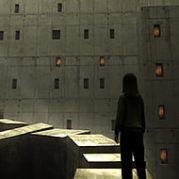
The tone divides people too. Corporate horror with a deranged puppet host is a lot of fun if you enjoy dark workplace satire, and tiring if you wanted a straight card battler. The expanded demo leans into the satire by letting you leave the card table, explore the office, and spend more time with Mr Magpie, and it adds a SHARES system and a reworked Strategy selection on top.
Players who want a long, stable campaign should note that the structure is built for quick runs with a strong just one more run pull. The loop is short, the stakes are sharp, and a bad flip ends things fast.
These are the questions players tend to ask when they start their first run.
Mr Magpie’s Harmless Card Game turns a simple flip into a decision you feel in your gut, whether it is a hint card you doubt, a Perk like Whisper Network you hope will save the board, or a JERRY you almost see coming. If you can live with the occasional coin-flip guess, the supply closet and the next round are always one more run away.