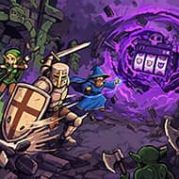
Mops & Mobs: A Sweeping Dungeon Adventure looks like a familiar fantasy dungeon crawl, but its real workload is closer to running a monster-filled workplace. The labyrinth is full of creatures with problems, neglected rooms, and a dungeon master who needs help keeping the operation together. Exploration uses a retro dungeon-crawler perspective, while conversations, decoration tasks, investigation, and card battles give each visit a different purpose. The joke is that the dungeon is not simply a place to conquer; it is a place where you have to keep the staff happy and the floors clean.
| Genre | Dungeon adventure, exploration, narrative RPG |
| Perspective | First-person, grid-based movement |
| Role | Dungeon janitor |
| Core activities | Clean, decorate, investigate, talk, and battle with cards |
| Progress | Story and dungeon areas; full release information remains in development |
The main loop combines moving through the labyrinth with helping its residents. The dungeon includes places such as the greasy kitchen, ancient library, gold hoard, bookkeeping area, spooky graveyard, hidden corridors, and fiery forge. Movement follows a classic grid-based approach with 90-degree turns, so exploring is deliberate rather than free-roaming. That old-school structure makes it useful to remember where corridors lead and which rooms still need attention.
Cleaning is more than a visual side activity. Dirt heaps can contain critters, and clearing them helps restore rooms that have been neglected. Decoration quests ask you to learn what each monster likes, so a room should reflect its resident rather than receive random furniture. Players who enjoy cozy management loops will find satisfaction in turning a grim corner of the labyrinth into somewhere its occupant actually wants to spend time.
Newcomers may expect every monster to be a combat encounter, but conversation is often the more productive first move. The cast includes a regretful lich, an existentially troubled gelatinous cube, a prison guard longing for immortality, and a bridge troll whose purpose has become complicated. Talk to them, find out what is wrong, and treat their requests as clues about the wider dungeon. The humor works because the monsters have mundane emotional problems alongside their fantasy identities.
Card-based combat gives the adventure a second ruleset. Monsters, adventurers, rats, and even dirt heaps can take part in card fights, and helping residents can earn special cards for your deck. Rather than relying only on reflexes, you prepare a collection and use it to handle encounters. That makes side conversations and favors potentially useful for combat progression as well as story development.
The mystery asks you to investigate a forgotten war and a growing conspiracy. Interrogate residents, look for evidence, solve puzzles, combine clues, and decipher hidden symbols instead of assuming that the dungeon master has explained everything. The strongest approach is to revisit suspicious details after a new conversation, because a clue that seemed like background decoration may become meaningful later. Players who like detective adventures should take their time with dialogue rather than clicking through it as filler.
The mixture is unusual by design. One moment you are arranging a room for a monster; the next you are investigating a symbol or choosing cards for a fight. The change of pace keeps the dungeon from becoming a simple corridor crawl, though players who want constant action may find the dialogue and upkeep slower than expected. The demo showcases the first level and introduces the central systems, but the full adventure is still in development, so its complete area count and final progression should not be assumed.
Early on, treat the dungeon as a connected workplace. Learn the route between the kitchen, library, and other accessible rooms, and use each conversation to identify the resident’s immediate concern. Cleaning tasks can open up a room’s potential, while decoration requests reveal personality. A player who enjoys narrative exploration will get more from reading the small details than from rushing toward the next fight.
Once card battles enter the routine, pay attention to the cards earned from helping characters. The deck is not separate from the story: your relationships and favors can affect what tools you bring into a confrontation. Do not assume that a single strong card will solve every encounter, especially when the game is still being tuned. Experiment with the available collection and notice which cards complement one another.
The community-facing appeal is the office-comedy twist on familiar dungeon-crawler ideas. The monsters are co-workers, adventurers are customers, and the janitor is the person trying to keep the whole place functioning. Some players may prefer the exploration and monster relationships to the card combat, while others will want the combat loop to become deeper as development continues. That balance is worth watching rather than treating the current demo as a final statement of the full game.
You explore the labyrinth, clean dirt heaps, repair and decorate rooms, and help the monsters who live there. Conversations reveal their problems and can lead to quests or useful cards. The job also draws you into an investigation about a forgotten war and a conspiracy affecting the dungeon.
Combat uses collectible cards, and helping monsters can reward you with special cards to add to your deck. The system gives the adventure a tactical layer alongside first-person exploration and dialogue. The demo introduces this mechanic, but the full card pool and final balance may change during development.
Shown locations include the greasy kitchen, ancient library, gold hoard, bookkeeping area, spooky graveyard, hidden corridors, and fiery forge. These rooms support both exploration and the janitorial tasks that make the dungeon feel lived in. The full release’s final area count has not been established in the available information.
Mops & Mobs: A Sweeping Dungeon Adventure stands out when the lich needs a better room, the gelatinous cube needs someone to listen, and the forgotten-war clues point beyond the next corridor. The grid movement, collectible cards, and monster-specific decoration requests give the dungeon a personality that a standard monster-clearing quest would never have.