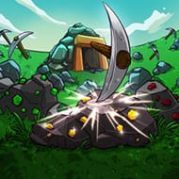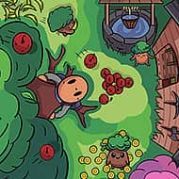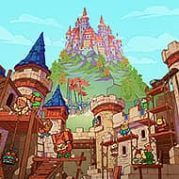
Gridlords looks like a relaxed pixel-art castle builder, but it plays like a puzzle about timing, ammo and placement where you never touch a single unit once the fight begins. You pick a Lord, build a fortress piece by piece, and send that setup against a saved copy of another player’s castle. The auto-battler logic decides the winner, so every result traces back to choices you made before the first shot was fired.
| Genre | Strategy autobattler with castle building |
| Battles | Asynchronous PvP against other players’ saved castles |
| Playable Races | One at the moment, with more planned |
| Leaders | Lords, each with a unique ability and personal philosophy |
| Visual Style | 2D fantasy pixel art |
| Steam Rating | Mostly Positive, 78% of 52 reviews |
Your castle is a grid, and every structure you place competes for the same limited space. Four kinds of pieces matter most, and Ammo is the quiet constraint behind all of them, because a weapon that cannot be supplied is just decoration. This building phase is where most of the time goes, and reviewers keep calling it addictive.
The grid works as a constant trade-off. Every tile spent on durability is a tile not spent on offense, and the strongest castles tend to commit to one clear idea instead of covering every base. Players who love puzzle-style optimization usually click with this phase within minutes, since it rewards the same instincts as packing an inventory into a tight space.
Early in the game you own very few pieces, so each placement carries more weight than it seems. A misplaced Barricade or an Ammo supply tucked into the wrong corner can cost you a match long before your roster of units grows.
Every run starts with a race and a Lord. The current build offers a single fully playable race, and the store page lists extra races, a broader hero roster, a ranked ladder and more building types as future additions. That keeps the first hours easy to learn, but players coming from deeper autobattlers will notice how narrow the choices are right now.
Lords bring a personal philosophy and a unique ability, which nudges you toward either relentless aggression or an impenetrable defense. Lord Abilities extend that identity further, so the pick is a real build decision rather than a cosmetic one. Theorycrafters will want to test how each Lord’s strengths line up with the weapons they plan to stack.
A good habit is to choose the Lord first and build toward that identity, instead of forcing a favorite weapon into a plan that does not support it. Even with one race, two very different castles can grow out of the same starting point.
During the playtest, community feedback centered on Mortars. Some players called them OP and argued that skipping them felt like throwing the match, while others pointed out that an item granting infinite pierce at a 60% damage penalty did nothing for Mortar shots beyond the penalty. Those were playtest-era complaints, so balance may have shifted, but they show the vocabulary the community uses: Mortars first, everything else second.
Barricades are the other half of that conversation. Covering your buildings from incoming Mortar fire is hard when you cannot wall off your entire front, and breaking through an enemy’s two or three Barricades takes real unit production. Playtesters also described an Earthquake effect that hit castles built from several low-health structures especially hard.
A castle that routes all of its firepower through a single Ammo source looks efficient until the supply is gone. By the time the Earthquake effect arrives, a layout with no durable core has little room to recover, which is why playtest posts kept returning to durability.
The most common mistake is building for damage alone. New players stack weapon structures, admire the numbers, and then watch the fight end before half of them have fired, because Barricades and Ammo were afterthoughts. Strong damage on paper means little when the castle falls apart under the first volley.
The second mistake is copying a winning layout without asking why it won. Your opponent is a ghost of another player’s build rather than a live person, so every match is a slightly different test, and a single lucky win says little about how a castle holds up. That format also means you cannot react or adjust mid-fight, which some players find frustrating, and the store page openly says asynchronous matchmaking is still being tuned.
The third mistake is ignoring unit synergies. Mixing unit types works best when each supports the other, and a random assortment of production buildings usually cancels itself out. The store page stresses synergies as a core feature for a reason.
Structures and items can be merged into level 2 and level 3 versions, which gives each session a clear direction: instead of adding another level 1 piece, you consolidate what you already own. It turns the building phase from simple expansion into a question of what deserves an upgrade.
Because the grid is tight, every merge is a spatial decision as much as a power decision. Min-maxers tend to treat merging as the real skill check, since the best upgrade is not always the strongest structure but the one that fixes the castle’s biggest weakness.
Once level 3 structures appear on both sides, spacing mistakes get punished harder because each piece carries more of the castle’s value. That is also where the limited content shows, since a single race leaves fewer ways to vary a strong layout.
You never face another person live. Your castle fights a saved version of someone else’s build, and the auto-battler resolves the fight on its own. That makes Barricades, Ammo supply and your Lord’s ability the only tools you control, and all of them must be settled before the match starts.
The current build offers one fully playable race, with more races, a broader Lord roster and a ranked ladder planned for later. Until then, variety comes from choosing different Lords and from the way you combine structures such as Mortars and Siege Cannons.
Playtest posts made Mortars sound close to mandatory, but that advice came from an earlier build and balance keeps moving. A safer approach is to compare the Fragmentation Mortar, the Blast Mortar and the Siege Cannon in practice, and to pair whichever you prefer with enough Barricades to survive the opening exchange.
Gridlords works best when you treat Barricades, Ammo and your Lord’s ability as one plan instead of three separate decisions. The fight itself is out of your hands, which is exactly why the quiet minutes spent merging structures and checking weak spots decide who climbs. If a puzzle that pays off in a battle you only watch sounds appealing, the Fragmentation Mortar is a good first test of how far one idea can carry a castle.