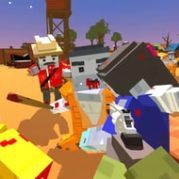
Auto Ball Arena looks like a toy box of spinning, bouncing warriors but plays like a build puzzle where every real decision happens before the fight begins. You pick a warrior, load them with weapons, attach charms, and then watch physics decide whether your plan survives contact. That handoff from planner to spectator is what the whole game is about.
| Genre | Physics auto battler |
| Perspective | 2D |
| Mode | Single-player runs with async battles against other players’ builds |
| Goal | Reach 10 wins in the gauntlet |
| Control | None during fights, adjustments happen between battles |
Every run starts with picking a warrior from the roster and arming them with weapons. Once the battle begins you cannot touch anything, so the build phase is where all of your skill lives. Beginners tend to grab whatever looks strongest, but weapons that spin, bounce, or slice behave very differently once physics takes over. The game rewards builds whose parts make sense together far more than builds that merely look scary.
Between battles you adjust. You buy charms, rethink your weapons, and tune the warrior based on what just happened. Strategy fans who enjoy the shop phase of a roguelite will settle in quickly, because the loop of plan, fight, and revise will feel familiar.
Planning beats reflexes here.
Battles run on autopilot and are entirely simulated with physics, so warriors spin, bounce, and slice their way through each fight. Because everything collides with everything else, a small change to a weapon or a charm can swing an outcome in ways a stat sheet would never predict. That is the key difference from auto battlers that simply compare numbers, and it is why a build can look dominant on paper and still lose a messy fight.
Casual players who just enjoy watching the chaos will find the fights entertaining even in defeat. Strategy players will find them more demanding, because every loss asks a question about why a weapon behaved the way it did. Early in a run the answers are usually obvious, but once your build has several charms the cause of a loss gets harder to spot.
A useful habit is to watch how your weapon moves rather than who simply won. If a build loses, it often turns out that one part of it fought against another, and that observation is worth more than any lucky streak.
Three terms come up constantly whenever players compare runs, and each one maps to a real decision in the build phase.
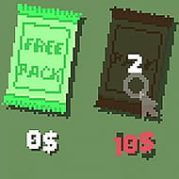
Charms are purchases that give a weapon extra abilities. They are the main way a plain weapon becomes the centerpiece of a build, and they are what you spend your attention on between fights.
Synergies are the combos players hunt for, where a weapon and a charm amplify each other instead of simply adding up. Finding a good synergy before an opponent does is the real skill of the game, and most community conversation revolves around it.
Quests are tasks that unlock new and more powerful weapons for the rest of the run. Completing one early changes what you can build later, so quest-minded players plan their first few battles around what they want to unlock.
Battles are asynchronous, which means you face builds stored from other players and nobody needs to be present at the same time. You play at your own speed and come back whenever you like to see whether your warrior made it through the gauntlet and reached 10 wins. That answers a question many newcomers ask: it is multiplayer in the sense that your build fights real players’ builds, but without waiting in a queue.
The format also makes sharing natural. You can send your best builds to friends and see how they match up, which turns a private run into a small competition. Competitive players will treat the gauntlet as a ladder, where the real test is not winning one fight but holding a build together across all of them.
By the time you are chasing the last of those 10 wins, your early choices have either paid off or fallen apart. A warrior built around one clever synergy can carry a run for several battles, but opponents with stored builds will eventually punish any obvious weakness.
Auto battlers always split their audience, and a physics-driven one splits it even more. Some players want control and find it frustrating to watch a good build lose to an unlucky bounce. Because you cannot step in once the fight starts, a bad result can feel unfair even when it was caused by a flaw in the build.
Others argue that this unpredictability is exactly the appeal. With new weapons unlocked through quests in every run, no two runs feel identical, and the chance of an unexpected outcome keeps the fights worth watching. Fans of the genre often say the surprise is what separates this style from a spreadsheet duel.
The sensible way to judge a build is across many fights rather than one. A single loss tells you very little in a physics simulation, but a pattern of losses against the same kind of opponent points straight at a weakness you can fix with a different charm or weapon.
Auto Ball Arena suits players who enjoy fiddling with a warrior’s weapons and charms more than they enjoy steering the action. Between the quests that unlock stronger weapons and the 10 wins waiting at the end of the gauntlet, each run asks you to plan carefully and then accept what the physics decides. Build something with a clear synergy, send it into battle, and see whether your warrior can bounce its way to the top.