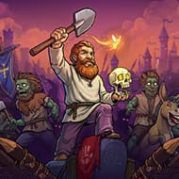
In Graveyard Keeper 2 you start as the Grand Inquisitor rather than a lost stranger, with a neglected graveyard to run, a town in ruins and a zombie apocalypse pressing against the realm, which matters because every system in the sequel pulls you in three directions at once. The dark humor of the original is intact, but the scale and the pressure are far bigger.
The new role changes the tone from the first minute. Instead of stumbling into a job you never wanted, you arrive with authority and a mission: restore the town, manage the graveyard and lead an undead army to save the kingdom. The irony is that the person fighting the zombie apocalypse is also the one relying most on the undead to get work done.
That contradiction is the joke the whole game is built around.
Returning fans recognize the humor instantly, from grotesque characters to morally questionable solutions for every problem. New players who come in expecting a gentle farm game are often surprised by how dark the jokes get, even though the art style looks cozy on the surface.
The graveyard is still the foundation. You harvest flora, fauna and human remains, then turn those resources into machinery, crafted goods and income. Expanding the graveyard is directly tied to profit, so neglecting it slows everything else down.
Early days are all about establishing a stable loop. Plots need attention, resources need to be processed, and the money that comes out of it funds every other system in the game.
A common beginner mistake is jumping into town quests before the graveyard can support them. Veterans of the first game usually lock down a basic income loop first, because every later upgrade depends on it.
Automation is the biggest structural change from the original. Zombie workers act far more independently this time, and the production system has been reworked so repetitive tasks can be handed off instead of done by hand. Where the first game had you turning every stone yourself, the sequel lets the undead handle the heavy lifting.
That shift changes how the day feels. Instead of grinding the same chores, you spend more time planning production chains and deciding which tasks deserve your personal attention.
Optimization-minded players love this part, since efficient chains are deeply satisfying to build. Players who enjoyed the hands-on grind of the first game sometimes feel the automation removes some of the old charm, and that debate shows up often in early discussions.
The sequel adds a real combat layer. You build towers and fortifications to defend the town, craft armor and weapons, and arm and train an undead army that the game openly describes as not very smart. Battles lean toward a tower-defense style, where preparation matters as much as reaction.
Training your troops is where many runs stumble.
Sending poorly equipped zombies into battle wastes resources quickly, so strategy players usually invest in gear and fortifications before pushing forward. Once the larger threats appear, the difference between a prepared defense and a rushed one becomes painfully clear.
The town is a much bigger stage than the small village area of the first game. Townsfolk need their homes restored, and their problems become opportunities for revenue, which fits perfectly with the series’ cynical humor. Quests spread across the whole town while your undead workers carry out the labor behind the scenes.
Planning around quests keeps the day efficient. A simple priority order helps more than any single upgrade:
Story-focused players enjoy the cast of grotesque characters most, since each quest line brings a new twisted personality into the mix. Their requests are often the funniest part of the day, even when they are the most expensive.
The first game was a slow, lonely management sim built around a single graveyard, with memorable oddities like Gerry, the talking skull, and a supply chain that involved selling suspicious meat to the local tavern. The sequel keeps that spirit but expands in every direction, adding a bigger town, automation and full undead battles.
That growth is also the source of the main debate. Some longtime fans worry that the action and tower-defense focus pull the series away from its cozy management roots.
Others argue that automation fixes the biggest complaint about the original, which was the exhausting grind. Early impressions suggest the truth depends on playstyle: management fans still get a deep economy, while players who wanted more variety finally have battles to plan around.
It still has deep graveyard management, crafting and production chains, but it adds battles with a zombie army and tower-defense style fortifications. Players who loved the calm loop of the original will find it underneath, alongside a much bigger action layer.
No, the story starts fresh with you as the Grand Inquisitor in a new town. Knowing the original helps with references like Gerry and the dark humor, but the systems are explained from the beginning.
Zombie workers can take over repetitive production tasks, which leaves more time for quests and defenses. Setting up automated chains for materials the town requests often is one of the best early investments.
Graveyard Keeper 2 rewards players who think like managers and generals at once: keep the graveyard profitable, hand routine work to undead workers, fortify the town with towers, and lead your not-so-smart zombie army only when the Grand Inquisitor is truly ready. Balance those three jobs and the town slowly turns from ruin into a very profitable, very questionable success.