









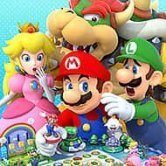
Can you turn a good minigame result into a Star before another player gets there first? MARIO PARTY Monday makes that question the centre of every board-game night. Four players move around the same board, collect coins through spaces and minigames, and try to finish with the most Stars. The simple rules leave plenty of room for grudges because a lucky roll or a well-timed minigame can overturn a comfortable lead. Every turn asks whether to chase the obvious reward or prepare for the next one.
| Format | Multiplayer party board game |
| Players | Four-player board setup |
| Main currency | Coins |
| Main objective | Finish with the most Stars |
| Key decision | Balance Star routes, coins, and minigame results |
The central trade is straightforward: collect coins, then spend them with Toad to obtain a Star. In the familiar ruleset represented here, a Star costs 20 coins, so coins are not just a score that looks nice on the results screen. They are the resource that lets a player convert a good turn into lasting progress. A player can win several minigames and still fall behind if those coins are never turned into Stars.
Toad’s position changes after a Star is purchased, which makes the board a moving route problem rather than a simple race toward one fixed point. New players often head toward the space where the Star was last seen and waste movement when another player has already changed the target. Check the board before committing to a route, and consider how many turns it will take to reach the new location. A player who enjoys tactical board games will usually get more value from planning two turns ahead than from chasing every immediate opportunity.
Coins also matter when deciding whether to take a detour. A short route that passes useful coin spaces can be stronger than a direct route that leaves you unable to afford the next Star. Minigame wins are valuable because they can repair a weak coin total, but they should not be treated as guaranteed income. The best turns combine a realistic Star route with a backup plan if the dice roll comes up short.
Minigames interrupt the board movement and give players another way to gain coins. Their importance is easy to underestimate: a single strong result can fund a Star, while a poor result can leave a player stranded just short of the price. Learn the controls and objective before trying to play aggressively, especially when a minigame rewards precision rather than frantic button presses. A calm first attempt often beats an elaborate strategy that ignores the actual rules.
Board spaces should be judged by what they make possible next, not only by their immediate reward. A coin gain can be more useful than a flashy detour if it brings you to the Star price, while a route that positions you near Toad can pressure the other players. Players who like competitive party games should watch opponents’ totals as closely as their own. The leader is not always the player with the most coins; it is usually the player who has converted those coins into Stars at the right time.
Randomness is part of the format, and it can make a carefully planned route collapse after one poor roll. That does not mean decisions are irrelevant. Strong players limit the damage by keeping enough coins for a second opportunity and avoiding routes that depend on one exact result. The game is most entertaining when everyone understands that luck can swing a turn but preparation still shapes the odds.
A common 20-turn setting gives the match a clear rhythm: early turns build coin reserves, middle turns convert those reserves into Stars, and late turns become a race to protect a lead or force a comeback. The exact value of a turn changes as the finish approaches. Early in the match, a detour for coins may pay off several turns later; near the end, a small immediate gain may be the only useful option left.
Do not assume the player in first place is safe. A rival can win a minigame, reach Toad, or benefit from a favorable roll and change the standings quickly. Likewise, a player with fewer Stars may still have a strong position if they have enough coins and a short route to the next Star. Keeping track of both resources gives a much better picture than looking at the Star count alone.
The divisive part of a Mario Party-style match is the balance between luck and agency. Dice results can feel harsh, and a late swing may erase several good turns, which frustrates players who want a purely skill-based contest. On the other hand, that volatility is exactly what makes a casual session memorable: nobody can relax completely, and a player who seems finished can still become dangerous. The best approach is to make sound choices without expecting the board to reward every one of them.
The rules described for this board setup use a 20-coin Star price. That makes coin spaces and minigame results directly relevant to the main objective rather than secondary points. Check your total before taking a route toward Toad, because arriving without enough coins can waste a valuable turn.
Toad relocates after a Star purchase, so the next Star is not necessarily in the same place as the previous one. Recheck the board after each purchase and adjust your route instead of following an old plan. This moving target is what makes board awareness important throughout the match.
Focus on building enough coins to buy a Star, then use minigames and route choices to create another scoring chance. A player behind on Stars should watch where Toad moves and whether the leader can reach him first. A comeback is possible, but it usually requires both a good result and a route that converts that result into a Star.
MARIO PARTY Monday rewards players who keep one eye on Toad and the other on the coin count. The 20-coin Star price, shifting board position, and minigame swings create the familiar mix of planning and chaos, so the strongest move is often the one that leaves you with a second option when the dice refuse to cooperate.