








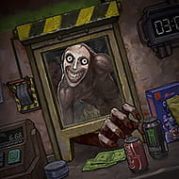
The Anomaly Archive in Retail Hell does not fill up the way a normal collectible list does. It only grows when you notice something wrong and survive long enough to remember it, which turns a simple walking loop into a game about trusting your own eyes over your own instinct to just keep moving. The path winds through a dark, distorting forest that folds back on itself, and the only tool you get is a habit: look carefully, or start the loop over.
| Genre | Liminal Horror / Anomaly Detection |
| Perspective | First-person |
| Objective | Spot anomalies along the looping path and reach the end without missing one |
| Player Mode | Singleplayer |
Retail Hell borrows its central idea from the wave of anomaly-loop horror games built around a single repeating stretch of scenery, and it earns the comparison instead of just copying the shape of it. Every lap down the path looks identical to the last one at a glance, which is exactly the trap. The loop itself is the antagonist here more than anything with a face: it rewards patience and punishes the reflex to speed through a stretch of forest you think you already memorized.
Early laps are forgiving; changes sit close to the path and are easy to catch once you expect them. That eases off as you go deeper, and the easy tells stop coming.
Players who treat Retail Hell like a walking sim and stop paying attention get punished quickly, while players who slow down and actually scan the treeline on every lap tend to last considerably longer before a wrong call sends them back.
The Signboard Guide is the closest thing Retail Hell gives you to a rulebook, and it is deliberately limited. Rather than listing every possible change ahead of time, it nudges you toward the kind of attention the loop expects without spelling out specific answers. This is the detail that separates players who improve over multiple attempts from players who stay stuck guessing at random.
There is no narrator confirming whether a read was right until the consequence plays out, an ambiguity players either love or resent depending on whether they wanted a puzzle or a scare.
Once an anomaly has been correctly identified, it gets logged into the Anomaly Archive rather than just fading from memory, and that archive becomes a quiet form of progress tracking in a game that otherwise refuses to show you a score. Checking it between attempts is where a lot of the community’s actual strategy talk happens, since comparing notes on what has and has not been logged is the closest thing this loop-based format has to a walkthrough.
It also answers the question newcomers ask most: the loop is not unbeatable, it just keeps testing you until the archive reflects real mastery rather than a lucky run.
Visually, Retail Hell leans hard into a scratchy VHS filter that blurs fine detail and adds a layer of static-era grain over the whole loop. It is a strong aesthetic choice and a genuinely divisive one: some players say it sells the unsettling, half-remembered quality of the setting perfectly, while others argue it actively works against the core mechanic by making subtle anomalies harder to spot on purpose. Both sides are right about what the filter does; they just disagree on whether that difficulty is fair.
Toggling it off changes the whole feel of a run, trading atmosphere for clarity, and which setting a player prefers says a lot about whether they came to Retail Hell for the dread or for the puzzle.
Like a lot of small loop-horror builds, Retail Hell hides a Developer Access mode that curious players have poked at outside of normal play, and it has become a minor point of community chatter precisely because the game does not acknowledge it anywhere in the regular interface. Whether that counts as a fun secret or an unfinished seam showing through depends entirely on who you ask, and it is worth saying plainly that this is still an early build rather than a finished, content-complete release.
That unfinished edge is honestly part of the experience right now. The core loop of Retail Hell already works, the Signboard Guide already teaches you to look, and the Anomaly Archive already gives you something to chase, even while the rest of the project is clearly still being built out around them.
What makes Retail Hell worth returning to is not any single scare but the accumulating discipline of the loop itself: the moment your eyes catch a change in the path before your feet do, and you turn back instead of walking straight into it. That instinct, once it clicks, is the real reward the Anomaly Archive is quietly keeping score of.