









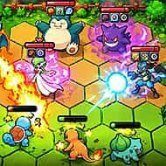
What do you do with a bench full of half-finished evolutions and a shop that keeps offering the wrong Pokémon? Kanto Tactics asks that every round, and the answer is usually patience. It is a browser-based auto-battler where first-generation Pokémon fight on a hex-tile board, and you never touch a unit once the fight begins.
Each round opens in the shop. You spend gold on Pokémon, place them on the hex board or the bench, and then watch the automatic battle play out. Positioning is your only direct control, so a bulky frontline and a protected backline matter more than any single purchase in this game.
Rounds alternate between neutral waves and trainer matches, which makes a run feel like a gym-by-gym climb toward the Indigo Plateau instead of a lobby of eight rivals. Teamfight Tactics veterans notice that structure first.
Gold follows the classic interest curve: banked coins earn more coins, so spending everything each round feels good for a turn and costs you later. Buying XP and rerolling the shop both pull against saving, and that tension is where most early losses come from.
Merging three identical copies triggers an evolution, so a stack of Charmeleon becomes Charizard. Beginners often sell duplicates to chase a fresh purchase, which quietly deletes the evolution they were halfway to finishing.
Early in a run a single evolved unit can carry your frontline. By the time rival trainers field stacked rosters, one Charizard is not enough, and you need a second win condition behind it.
A starter such as Squirtle is a fine anchor, but loyalty to one species can trap you when the shop refuses to deal the third copy. Staying flexible for a few rounds costs little.
Type traits switch on when enough matching Pokémon share the board. Poison and Fire work as team-wide synergies, and Flying is one of the type-based traits that rewards committing to a theme instead of collecting one of everything. Pokémon fans who like drafting around types will feel at home immediately.
Spreading components thinly across the roster is a common beginner trap. One well-equipped carry usually beats five lightly equipped units.
Item variety is the most common complaint: the catalog works, but it feels bland next to what people expect from a mature auto-battler. During chaotic clashes the 3D-styled sprites and effects can look cluttered, and it gets harder to read what is happening on the board.
It is also a fan project with a lighter system than its inspiration. Teamfight Tactics layers in portals, augments and origin traits, while Kanto Tactics sticks to gold interest and Pokémon type synergies, and players who love those extra layers will miss them.
That simplicity is a strength for newcomers who want to learn auto-chess basics through creatures they already know.
Kanto Tactics rewards the player who sells the shiny impulse buy and waits for the third Charmander. Bank your gold, protect your Charizard, and the Indigo Plateau stops feeling like a distant promise.