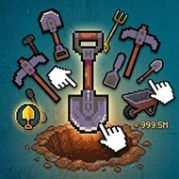
In Dirt Clicker you start with nothing but a spoon and a small patch of soil, and that humble setup shapes the entire run. Every early dig feeds one loop: dirt turns into currency, currency turns into tools and helpers, and those upgrades push you toward the next layer. The first ten minutes decide how smoothly everything after them flows, long before the skill tree becomes the real centerpiece.
| Genre | Idle / incremental clicker |
| Platform | PC |
| Starting tool | Spoon |
| Core loop | Dig, buy tools and pals, expand the skill tree, go deeper |
| Extras | Relics, chests, badges, achievements, leaderboards |
The spoon is not a throwaway tutorial tool. Its first speed upgrade adds 3 percent, which sounds tiny, but those early percentages stack under everything you buy later. Players who rush past the spoon to afford the next tool in the shop often hit a wall one layer down, because their base speed never got the cheap boosts it needed. Patience here pays back tenfold once automation kicks in.
The game rewards a rhythm of short active bursts followed by longer idle stretches.
Idle-first players will like that pals keep digging while you step away, but the spoon still matters for them too. A handful of achievements are tied to digging a set amount using nothing but the spoon, so completionists often come back to this phase later on purpose, turning the weakest tool into a self-imposed challenge run.
Each new layer changes how fast progress feels. Early on, dirt pours in and every purchase is instant; by the time you break into deeper layers, costs outpace income and the shop starts asking for real planning. Chests appear during digging and can hold uncommon items, which were made more common in a later balance patch after players complained drops felt too stingy.
Relics are the long-term hook. They add passive bonuses that change how a build plays, and reading their descriptions carefully matters more than grabbing whatever drops first. Common beginner mistakes include:
Once pals start working in parallel, the dig becomes a numbers-go-up engine, and that is exactly the part the community calls satisfying. It is also the point where the pace stops feeling like a chore and starts feeling like momentum.
The skill tree is huge and zoomable, and new branches keep pushing upward as you unlock them. Min-maxers tend to map out speed and pal efficiency first, then chase drop-rate nodes for relics. The honest downside, which players bring up often, is that the tree can feel overwhelming when every node looks equally important and the stats of tools and pals only become clear once you compare them in the shop.
Some players in the community hub proudly talk about breaking the game with odd combinations, and that is half the fun. Others feel the late tree drifts into long waits between meaningful unlocks, which is the classic incremental debate: is the slowdown tension or just padding?
A good habit is to check what each branch actually multiplies before committing, since the tree is where a slow run turns into a fast one. Undoing a bad path costs time, so reading first saves hours.
Dirt Clicker turns a spoon, a patch of soil and a growing crew of pals into a surprisingly deep chase toward the bottom layer. Treat the skill tree as the real engine, respect the early spoon upgrades, and the relics and chests you uncover on the way down will keep every session feeling like progress.