Death by Taxes looks like a clicker about being obscenely rich, but it plays like a race to become poor as fast as possible. You start with one billion dollars and one serious problem: the money is still yours, and the tax bill is coming for it. Every click is an attempt to bring your balance to zero before that bill arrives.
| Genre | Satirical incremental clicker |
| Starting balance | One billion dollars |
| Goal | Spend everything before the tax bill arrives |
| Controls | Mouse only |
The core loop is the reverse of every idler you have played. Instead of watching a number climb, you click to buy ordinary things such as coffee, food, cigars, and gadgets in absurd quantities, and the point is to make your balance fall. Early in the game the purchases feel tiny next to a billion dollars, and that contrast is where much of the humor comes from.
Beginners tend to treat it like a normal incremental game and hoard upgrades. The better habit is to remember that your opponent is the tax bill, so anything that raises your spending speed is worth more than anything that merely looks impressive. Idler veterans will recognize the instinct to optimize, just pointed in the opposite direction.
The numbers get bigger and the screen gets messier as your spending machine grows, which is exactly the mood the satire is aiming for. It is a clicker that rewards chaos rather than careful accumulation.
Every terrible financial decision unlocks another one. A large skill tree offers stronger clicks, faster purchases, and abilities that turn casual shopping into something closer to an industrial operation. You choose a path and stack its bonuses, and then the tree turns out to be much bigger than it first looked.
That size is both the hook and the possible weak spot. Players who love branching upgrade trees will enjoy planning a path, while anyone who dislikes menu-heavy idlers may find the number of choices tiring after a while.
Abilities are the other half of the toolkit. Combining skills and abilities is how a single click becomes an avalanche of waste, so pairing a faster purchase speed with a strong ability is the natural way to build momentum.
Doing all the shopping yourself is terribly middle class, and the game knows it. You can recruit collectors and other helpful NPCs to buy things on your behalf, which brings a touch of automation into the clicker. Players who enjoy automation will find this is where the loop starts to feel like running a machine.
Helpers handle the busywork, but they will not solve everything for you. You still need to stay sharp and use your abilities to keep the money moving, which keeps the game from turning into a pure idle screen.
Once collectors are running, the question shifts from how to spend to how to spend faster. You now balance manual clicks against whatever your helpers are doing in the background, and that changes how you read the screen.
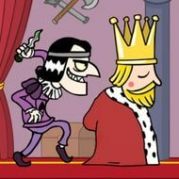
At the end of every spending segment, someone tries to stop you from making an even worse financial decision. These unique bosses have defenses you need to break through, and defeating one unlocks a more powerful way to burn cash.
By the time you reach your first boss, you will have a good sense of whether your setup is spending fast enough. Beat the boss, take the upgrade, and move on to something much more expensive, and then the cycle repeats.
A clicker built on repetition will always divide players. Some enjoy the escalating silliness, while others may want more variety between segments, and the satire is only as strong as the next absurd purchase.
Death by Taxes works because the joke never stops asking you to commit: one more click, one more skill, one more collector spending your billion on cigars. By the time the first boss blocks your path, you understand the trick, which is that every ability, every helper, and every ridiculous purchase serves a single goal. The tax bill is the clock, and your balance is the only number that matters.