










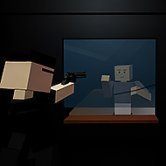
You enter the Supermarket with firearms available, NPCs moving through the space, and a police response that can arrive sooner than returning players may expect. Dead Check Private Page is a fictional single-player shooter built around immediate combat decisions rather than a long campaign of unlocks. The current page identifies Update 4.1 and tracks Kills, Injured, Shots Fired, and Deaths, so a run leaves a small record of how events unfolded. The tension comes from managing weapon behavior while watching the response develop, not from following a fixed sequence of scripted steps.
| Genre | Single-player shooter |
| Mode | Single-player |
| Current build noted on page | Update 4.1 |
| Featured map | Supermarket |
| Run statistics | Kills, Injured, Shots Fired, Deaths |
The basic loop is direct: choose a firearm, move through the environment, and respond to NPCs and police as their positions change. Weapon categories help make selection quicker, but the guns do not share one universal firing rhythm. Update 4.1 increased the M16 fire rate and changed the AR-15 to semi-automatic fire, while adjustments to shooting delays and recoil affect how each weapon feels. A player who assumes every rifle can be handled with the same trigger rhythm may find their aim and timing out of sync.
Early in the game, take a moment to recognize the feedback from the selected firearm before committing to a fast sequence. The difference between recoil recovery and a weapon’s firing delay is easy to miss when the screen is busy, yet both shape how quickly you can make a follow-up shot. The M16’s increased fire rate is a specific change worth noticing, while the AR-15’s semi-automatic behavior makes deliberate input more relevant than holding the trigger. Treating these as distinct tools is more useful than trying to force one routine onto the whole loadout.
Players who enjoy hands-on experimentation can compare weapons across repeat runs, while players who prefer a simpler action loop can keep their attention on movement and immediate reactions. The Stats UI offers a practical way to review those attempts: Shots Fired alongside Kills and Deaths can reveal whether a different pace changed the outcome. There is no need to turn every run into a high-score chase; the recorded numbers also help make sense of what happened.
Police and SWAT behavior contributes to the changing pressure of an encounter. Update 4.1 improved their behavior and addressed damage issues involving SWAT units, and NPC running animations were also improved. These adjustments make movement and response part of the moment-to-moment read, rather than background decoration. Watching how characters move can help you understand when the space is becoming harder to manage.
The Supermarket provides a concrete timing reference: police arrival was reduced from 160 seconds to 140 seconds, and the number of responding officers was reduced as well. That shorter interval matters if you remember an earlier build and expect the same amount of time before a response. By the time the 140-second mark approaches, a player may need to reassess their position and weapon choice instead of relying on an old route or pace.
One recognizable rhythm is the shift from observing NPC movement to noticing the police response becoming more immediate. Players who like reading a space before acting can focus on those movement cues, while players drawn to fast reactions may prefer to keep weapon selection accessible. The balance can feel demanding, especially when several things change at once; the game does not always give a relaxed window to study each behavior in isolation.
Weapon selection is organized into categories, which reduces the amount of menu searching when you want to change equipment. The update notes also describe changes to the Re-870 and fixes involving delayed Saiga-12K pellets, alongside recoil and shooting-delay adjustments for several firearms. The SIG Sauer was removed, so returning players should not assume an older selection remains intact. These are concrete differences to check when a familiar weapon suddenly feels unlike the one you remember.
A common beginner mistake is to judge a firearm after only one hurried burst. Recoil, fire rate, and semi-automatic input all affect the pace of aiming and firing, so a short comparison in a relatively calm moment can teach more than repeated frantic attempts. The M16 and AR-15 are especially useful contrasts because their update changes affect firing cadence in different ways. If a weapon feels inconsistent, first consider its actual firing mode and timing rather than assuming the controls have stopped responding.
Players who enjoy tuning their approach can use repeated attempts to compare the feel of the M16, AR-15, and Re-870, while players who value straightforward sessions can choose a familiar category and focus on situational awareness. The surrender or end-run option also lets a session stop when the player has observed the mechanic they wanted to test. That flexibility is useful, though the option itself has prompted mixed reactions in community comments alongside requests for a toggle and preferences for older NPC faces.
Dead Check Private Page is structured around encounters and run statistics, not a documented set of numbered levels. The available page describes a featured Supermarket map, current weapon adjustments, police and NPC behavior, and the ability to surrender or end a run at any time. It does not establish a total level count, a release year, or a broader progression ladder, so those details should not be treated as confirmed. The practical objective within a session is to navigate the encounter and decide when to continue or end the attempt.
The tracked figures—Kills, Injured, Shots Fired, and Deaths—give the end of a run more context than a simple pass-or-fail label. They can help you compare a cautious approach with a hurried one, or notice whether a weapon change altered the number of shots fired. The game can still feel rough around the edges: player comments have questioned the revised NPC faces and discussed whether surrender should be optional. That feedback points to a real presentation and preference debate, rather than a universally shared response.
For players arriving from an earlier build, the first few minutes are best spent noticing the altered weapon cadence, faster Supermarket response, and revised character presentation. For newcomers, the same details provide a clear way to learn what drives the pressure without inventing a mission structure that the page does not describe. Keep expectations focused on the current systems and their interactions.
Update 4.1 reduced the Supermarket police arrival time from 160 seconds to 140 seconds and also reduced the number of responding officers. This makes the timing a useful reference when learning the map, especially if you are returning from an earlier build. The broader police and SWAT behavior was also improved, so the response should be understood as more than a single countdown.
The M16 received an increased fire rate, while the AR-15 was changed to semi-automatic fire in Update 4.1. Several semi-automatic firearms also received shooting-delay adjustments, and recoil was improved on multiple weapons. Check each firearm’s rhythm separately rather than expecting the same firing pattern across the loadout.
Yes, the current build allows players to surrender or end a run at any time. This can be useful when testing a weapon or observing police behavior, because you do not have to continue after gathering the information you wanted. Community comments show that the surrender option has also been a point of discussion, with some players asking for a toggle.
Dead Check Private Page centers on the relationship between firearm handling and a changing response, with the M16’s faster cadence, the AR-15’s semi-automatic mode, and the Supermarket’s 140-second police timing giving players specific details to learn. The Stats UI then records Kills, Injured, Shots Fired, and Deaths, making each attempt easier to review. Those named systems define the current shape of Dead Check Private Page more clearly than any unverified level count or promised progression path.