






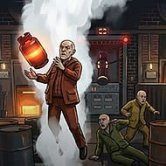
You step onto the inspection line beside five other clones, and the factory gives the group one clear target: only one unit can leave a shift marked FIT. UNFIT is a brutal party game where friendship lasts only until the next hazard arrives. Each shift sends up to six units through lethal quality-control tests, while players shove, steal, and sabotage one another to survive machinery, gas, drops, and moving vehicles. The joke is bleak, the physics are hostile, and every round turns cooperation into a temporary convenience.
| Genre | Physics-based party action, PvP |
| Players | 2–6 clones |
| Setting | Acceptance and Control Plant (ZPK) |
| Core objective | Be the one unit declared FIT |
| Structure | 20+ inspections and a final duel |
The factory’s conveyor line sends clones through a collection of tests designed to expose mistakes. A press, crane, gas hazard, bullet, and other dangers can turn a safe-looking position into a failure in seconds. The inspection types include Respirator, Drop, Traffic, The Car, The Dish, Drift, Crates, and Red Light. Each asks for a different response, so players need to understand the hazard rather than rely on one movement trick for every round.
Some tests are about reaching a safe point, while others reward timing, control, or positioning. In Respirator, there is one fewer mask than there are clones and filters wear out. Traffic provides one fewer shelter than players when the convoy arrives, while Red Light asks players to reach the QC gates when the scanner is looking away. These uneven conditions make the rules deliberately unfair: survival often means anticipating what the other clones will do before the hazard begins.
New players commonly focus only on their own movement and ignore the rivals around them. That is dangerous because almost every trial gives you a chance to shove, steal, or sabotage. A player who likes physics party games should watch for crowded edges and contested objects, while a more cautious player can wait for an opponent to commit before making a move. Neither approach is universally safe; the right decision depends on the inspection and the available space.
UNFIT encourages direct interference. You can push a rival off a loading dock, steal from another clone’s crate hatch, jolt a press, or force someone out of the last shelter before the convoy arrives. These actions make the group part of the hazard rather than a set of independent competitors. A clean route can disappear because another player has decided that your survival is bad for their score.
Learn the objective of each inspection before trying to sabotage. In Crates, cargo must reach your own hatch, so watching the other players’ loads can create an opportunity to steal. In The Dish, the cage spins above a slag bath and positioning near the edge becomes dangerous. In The Car, broken doors make holding on as important as moving, and a rival can turn a narrow escape into a fall. The game rewards situational awareness more than a fixed optimal strategy.
The factory setting gives the rounds a shared identity. Conveyors keep moving, presses keep pounding, and QC continues to stamp results whether a clone is ready or not. The dark humor comes from treating these lethal trials as routine workplace procedure. Players who enjoy chaotic multiplayer will likely appreciate the emergent betrayals, while anyone who dislikes physics-driven unpredictability may find collisions and last-second shoves frustrating.
Performance across inspections contributes to the shift result. Players earn points for passing a test, writing off a rival, and achieving the best result on the line. After the disposal shift, the top two reach the QC Hall for a final duel, where only one can leave as the FIT unit. That structure means a single round is not always the whole story: consistent survival and well-timed interference can matter across the shift.
There are more than 20 deadly inspections in the planned set, so learning every hazard takes time. The first few rounds are useful for recognizing how the factory handles movement and collisions, but later tests demand more specific responses. The clone customization options, including colors and headwear such as hard hats or caps, help distinguish players even though QC treats everyone as a numbered unit. A TV head is another cosmetic choice that fits the game’s absurd tone.
The divisive element is the same one that makes the concept memorable: player interference can feel hilarious when it works and cheap when it ruins a careful run. The game is designed around sabotage, so treating every shove as an unfair exception misses the point; however, the physics can still make outcomes feel less predictable than a clean skill test. The best players learn to use the chaos without assuming they can fully control it. Voice chat adds to the spectacle, especially when a plan falls apart at the last shelter.
UNFIT is designed for 2–6 clones. The factory tests the group with hazards that often provide fewer safe resources than there are players, such as one fewer respirator mask or shelter. That imbalance is part of the competition and makes awareness of the other clones essential.
Players accumulate results across the shift, including points for passing inspections and taking rivals out of contention. The top two then meet in the QC Hall for a final duel. Only one clone is declared FIT, while the rest are marked DEFECT.
Named tests include Respirator, Drop, Traffic, The Car, The Dish, Drift, Crates, and Red Light, alongside a larger set of inspections. They test different skills, from managing a limited mask supply to reaching the gates while a scanner looks away. Learn each round’s specific condition before deciding whether to rush, hold position, or interfere with another clone.
UNFIT makes the ZPK factory’s cold logic the centre of every match: survive the Respirator, keep your footing in The Dish, and do not trust the clone beside you when the last shelter opens. With 20-plus inspections, a top-two duel, and constant opportunities to shove or sabotage, the only result that matters is the one QC stamps FIT.