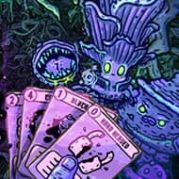
Shroom and Gloom looks like a cozy mushroom storybook but plays like a tense card dungeon crawl, where every hand forces a choice between hitting fungal monsters with the Combat deck and saving enough of the Explore deck to open the next locked door. The hand-drawn caves are charming, yet the decisions underneath are as sharp as any roguelike deckbuilder.
| Genre | First-person roguelike deckbuilder |
| Decks | Combat deck and Explore deck |
| Mode | Single-player |
| Structure | Run-based with meta progression |
| Main goal | Push deeper toward The Gloom |
Most deckbuilders split combat and exploration into separate screens. Here both live in cards: the Combat deck handles stabbing, slashing, seasoning and roasting enemies, while the Explore deck handles everything outside a fight, from revealing rooms to breaking obstacles and lighting fires. You walk through the dungeon in first person, and both decks shape every step.
That split creates constant tension.
Beginners tend to build a strong Combat deck and neglect the Explore deck, then get stuck in front of a locked door with no way through. Deckbuilder veterans who came from classic card roguelikes usually adjust quickly, but even they admit the double-deck structure takes a few runs to feel natural.
Every enemy is edible, and that single rule reshapes combat. You can skewer, season and roast fallen fungal foes, then eat them to restore health instead of relying only on healing cards. Food becomes a resource you create yourself, which turns every fight into both a threat and a supply run.
The pot is where things get wild. Tossing several defeated enemies into it brews soups with effects far stronger than eating them one at a time, and planning a fight around the soup you want is one of the most satisfying tricks the game offers. Cards like hot sauce add another layer, turning an enemy into a spicy, toasty card that heals you and hurts others.
Players who love weird synergies spend entire runs building around cooking. The community already treats “soup builds” as their own archetype, and swapping recipes has become a favorite topic in discussion threads.
The Explore deck is the quiet half of the design, and it decides how far a run can go. Its cards act as tools: maps reveal layouts, lockpicks open doors, campfires offer rest, and others let you search, break, ignite, feed or fix things in the environment.
The loop has a nice rhythm: fight through cramped corridors, then reach a locked door where you prepare, spend Explore cards and push forward. Players who master that rhythm find runs flow smoothly, while those who ignore it burn out on the second or third floor.
It also helps to remember that Explore cards cycle through your hand just like combat cards. A lean Explore deck draws its lockpicks and maps more reliably than a bloated one stuffed with situational tools, so trimming weak exploration cards is often as valuable as adding new ones.
Cards can be grown and modified without a hard cap, which is where the late game gets absurd. A humble starting card can become a monstrous attack after enough upgrades, and rare cards can turn into outright superweapons. By the time you approach The Gloom, a well-built deck feels nothing like the one you started with.
That flexibility has a cost, though, since greedy upgrades leave gaps elsewhere.
Min-maxers love chasing “infinite” combos and posting screenshots of ridiculous damage numbers. More cautious players prefer steady upgrades across both decks, which rarely produces headlines but tends to survive the deeper caves more reliably.
The game is in Early Access, and players are open about what still feels unfinished. Balance is the big topic, because infinite scaling makes some builds overwhelmingly strong while others struggle to keep up. Some runs also hinge heavily on which cards show up early, and bad draws can end a promising run before it gets going.
The art, on the other hand, is almost universally praised. The flat, hand-drawn layers slide together into 3D spaces in a way screenshots do not capture well.
Most feedback lands in the same place: the core idea is strong and the cooking system is a genuine hook, but pacing and balance will likely keep shifting as content arrives. Players who enjoy watching a game evolve tend to be the most patient with those rough edges.
Players still learning the two decks tend to get stuck on similar decisions. The answers below come down to balance between fighting and exploring.
Shroom and Gloom clicks once you respect both halves of the hand: feed the Explore deck so locked doors never stop you, cook fungal foes into soups for big swings, and scale your best cards far enough to survive the descent toward The Gloom. Every run teaches a new recipe or combo, which is exactly why one more attempt is so hard to resist.