






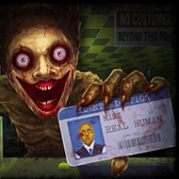
You slide a customer’s ID across the counter, type the name into the store computer, and the database says this person died years ago, which means the smiling guy holding a bag of chips is not a guy at all. That moment is the heart of Shift At Midnight, a co-op detective horror game set in a rural 90s gas station where some of your customers are doppelgangers. Stock shelves, hit the nightly quota, and question everyone, because the one you miss comes back later as something far worse.
| Genre | Co-op detective horror, shop management |
| Platforms | PC, Xbox |
| Players | Solo or co-op with up to two friends |
| Story Mode | 13 randomly generated shifts |
| Core goal | Meet the sales quota and let no doppelganger leave |
Every shift opens with plain retail work. Deliveries need unloading, empty shelves need restocking, spills need mopping, and the register needs someone behind it. You also have a sales quota, so ignoring the business side to play detective full time does not work. Players who treat the first few minutes as a warm-up usually fall behind on stock and end up rushing interrogations later in the night.
The trick is dividing labor. In co-op, one person handles the counter and paperwork while another restocks and cleans, and proximity chat makes that split feel natural. Solo players have it rougher, since every trip to the back room leaves the counter unwatched.
Because shifts are randomly generated, the customer mix and the number of doppelgangers change each night, so memorizing a single night never carries over cleanly. Adapting on the fly is part of the skill.
Detection is a checklist, not a vibe. The game hands you an ID, a computer database, and your own eyes, and every mismatch counts. Community guides and experienced players tend to check the same things in the same order:
Beginners tend to stop after the ID photo looks right. That is exactly where most escapes happen, because the tells often hide in the description quirks or the plate check rather than the face.
Asking follow-up questions also helps, because doppelgangers sometimes slip when pressed about details the database already shows. Comparing their answer with the screen takes seconds and can save a whole night.
When you are sure, you can execute a suspected doppelganger on the spot, and then you have to clean up the mess before the next customer walks in. Shooting a real human is its own problem, so paranoia has a cost. That tension between suspicion and certainty is what makes each interrogation feel heavy.
Detective game fans will love this part, since it rewards slow reading of small details. Chaotic friend groups, on the other hand, tend to argue over every customer, which is half the fun and half the reason shifts go wrong.
A sound every regular recognizes is the door chime right after an argument ends, usually followed by someone whispering that the next customer looks off. Nobody laughs at that chime by the fifth shift.
Miss one and the second half of the night flips into survival horror. A warning appears with a timer, and what you do before it hits zero matters more than anything else. Boarding the doors with wooden planks comes first, then traps, then finding a hiding spot for everyone.
The returning doppelganger is a monstrous version of the customer you waved through, and it hunts through the store. Groups that planned the barricade order in advance survive far more often than groups that scramble.
By the later shifts of Story Mode, the random mix can stack several suspicious customers close together, and the barricade phase becomes something you rehearse rather than improvise. That rehearsal is what separates veteran crews from new ones.
The game is playable alone, but its systems clearly lean toward groups. Solo runs demand fast multitasking and a very strict checking routine. Co-op spreads the workload but adds communication mistakes, like two people assuming the other one checked the plate.
Some players feel the solo experience is noticeably harder and less balanced, and that criticism comes up often in community discussions. Others enjoy the lonely atmosphere precisely because there is no one to double-check your calls.
Either way, the paranoia loop holds up across all 13 shifts, which is why people keep running it with new groups. Every new crew brings fresh arguments over the same suspects.
Shift At Midnight turns a quiet gas station into a test of attention, where the database check, the license plate, and a boarded door decide whether the night ends with a met quota or a returning doppelganger. Bring friends, trust the checklist, and never skip the plate.