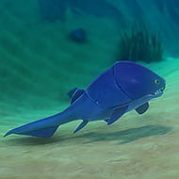
In Refished you start as a small, hungry fish in an ocean that does not wait, and that single condition shapes every decision you make. You hunt what you can swallow, escape what can swallow you, and slowly push your way up a living food chain where every hunter is also prey. The game is still in development, but the core loop already has strong opinions about how long a careless fish should live.
Starting Small in the Refished Food Chain
The central idea is growth through eating. You enter the water small, find prey that fits in your mouth, and use each meal to get bigger and unlock new species. The food chain is alive, which means every creature has a role, including you, and the hunt can turn around once you outgrow the predators that were chasing you. That reversal is the most satisfying moment in a run, because the same fish that once panicked at a shadow can suddenly look at the same shape as lunch.
Early in the game, caution matters more than speed. A small fish survives by noticing what is nearby and choosing fights it can finish, not by charging at the first thing that moves.
Players who enjoy sandbox-style progression will like the steady unlocks, while players who prefer quick action will appreciate that a session can end within a few seconds if you drift into the wrong part of the water. Both styles are supported by the same loop, and the difference is mostly in how patiently you read the water before committing.
Hunger, Health and Why Players Call It Brutal
Survival in the game comes down to two meters, hunger and health, while the world keeps moving around you. You cannot park in a safe corner and wait, because hunger forces you to leave and risk the open water. Health gives you room to survive a bad encounter, but it does not make mistakes free.
The community discusses the hunger system more than almost anything else. One forum thread asks outright whether hunger is extremely brutal, and the question has not gone away because the answer depends on how quickly you find your first good meal. A bad start can feel unfair, while a good one makes the system feel tense in a satisfying way.
That tension is the honest tradeoff of the design. The pressure is what makes hunting feel meaningful, but players who want a relaxed sandbox may find the early hunger drain more punishing than they expected. Tuning that balance is clearly part of what the project is still working on.
Crayfish, Pirate Crabs and the Creatures in the Water
The game offers playable creatures with distinct bodies, speeds and behaviors, so switching species changes how you hunt and how you flee. Several handcrafted maps give those species places to move through, including a coral reef area that has received cleanup attention in recent development notes. The names that appear most often in those notes give a good picture of the ecosystem:
- Piranha, which is a fast and aggressive pack-style fish.
- Squid, which has been capped so it does not overrun a map.
- Dolphin, which has received new skins.
- Crayfish, whose grip has been improved.
- Pirate crab and sea urchin, which have both had spawn and behavior fixes.
Those fixes tell you something useful: this is an ecosystem under active tuning. Players notice when a crab spawns in an odd place or a meal leaves behind clutter, and the steady cleanup work is how those rough edges get smoothed.
Completionists who want to try every species will have the most to chase, and explorers can spend a session just learning how each creature moves through the maps.
Where Refished Is Heading
Refished began as a fan project, and the page says it is becoming an original game. Art, audio and visual identity are being rebuilt with original work, so some models and sounds you see now are placeholders. The creator also promises the game will stay playable without a paywall, which gives early players some confidence in investing time.
Multiplayer is the feature with the biggest gap between promise and reality. A deathmatch mode is in development, but it is currently not available, and forum threads from players who cannot join show how many people were hoping for it. Another thread notes that some survival modes were not playable at one point, which fits the reality of a build that is still changing.
If you are curious now, treat it as an early look at a survival sandbox with a strong core idea. Expect rough edges, placeholder assets and a few systems that are not finished, and judge it on whether the hunt feels good.
Questions Players Ask About Refished
- How do you grow in Refished? You hunt prey small enough to swallow, feed to manage hunger and health, and use that growth to unlock new species. As you outgrow predators like the piranha, the same food chain that threatened you starts working in your favor.
- Does Refished have multiplayer? A deathmatch mode is being built but is not currently available. Players who tried to join sessions in the past have reported being unable to connect, so single-player survival is the reliable way to play for now.
- Can you play as different fish? Yes, the game includes playable creatures with different bodies, speeds and behaviors. Development notes mention dolphin skins and ongoing work on other species, so what you can switch between will keep changing as the project grows.
Refished rewards players who treat the ocean as a puzzle of timing and appetite. Whether you are dodging a piranha, avoiding a pirate crab or finally becoming the largest hunter in the coral reef, the best moments come when a fish that started small turns the food chain around.