








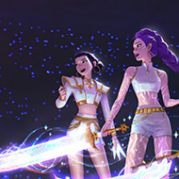
You land a strike right on the beat, a demon from Gwi-Ma’s side bursts apart, and the Honmoon still flickers because two more slipped past while you were chasing a longer streak. That moment sums up Kpop Demon Hunters as a fan-made game: it rewards rhythm, but it punishes tunnel vision even harder.
| Genre | Rhythm action fan game |
| Playable trio | Rumi, Mira and Zoey of HUNTR/X |
| Main goal | Keep the Honmoon from breaking |
| Session length | Short rounds, easy to replay |
| Controls | Keyboard, mouse or touch |
The appeal starts with the trio. Rumi is the leader everyone picks first, Mira brings the heavier, wider swings people associate with her polearm, and Zoey plays the quick, light fighter with thrown blades. Most builds that circulate under this name let you switch between them or cycle them per stage, and fans quickly develop a “bias” pick the same way they would with a real idol group.
Picking a favorite matters less than learning each member’s timing.
Fans who came from the film usually want to hear the songs and see the HUNTR/X stage outfits, and those moments are where these fan builds shine brightest. Rhythm-game regulars, on the other hand, tend to notice that the note patterns are simpler than in dedicated rhythm titles, so they push for higher streaks and cleaner runs instead of just surviving.
The Honmoon is the barrier that keeps demons out, and in the game it works as your health bar for the whole stage. Every demon that reaches it chips away at the glow, and once it cracks the round ends no matter how good your streak looked. Beginners focus on hitting every note perfectly and forget that missing a few is fine as long as nothing leaks through.
A practical order of priorities helps here. Most failed runs break at least one of these rules:
Once the later stages start stacking faster demons with slower ones, the difference between clearing and failing comes down to target choice, not reflexes. That shift is where most players either click with the game or drop it.
By the time the Saja Boys appear, the tone flips. Jinu and his group are presented as rivals on stage rather than simple enemies, and their segments are usually faster and busier than the regular demon waves. Players who breezed through the opening stages often hit their first real wall here.
The best preparation is simple: learn how the rival segments speed up and slow down, and keep one special move ready for the densest moments. Zoey’s quick attacks feel especially strong here, while Mira’s wide swings help when demons bunch up at the edges.
It is also where the biggest complaint shows up. Because these are fan projects, quality varies a lot between versions: some have smooth hit detection and recognizable melodies, while others are thin reskins with covers or placeholder tracks instead of the songs people expect. Casual fans who just want a few minutes with Rumi rarely mind, but players hoping for something close to the film’s soundtrack are often disappointed. Treat each version on its own terms and judge it by how responsive the timing feels in the first stage, not by the thumbnail.
Comment sections and fan servers keep circling back to the same three topics.
Kpop Demon Hunters works best as a quick, fan-driven rhythm fight: pick Rumi to learn the timing, protect the Honmoon before chasing streaks, and brace for the jump in pace when Jinu and the Saja Boys take the stage. Once the Honmoon holds through those stages, every later wave feels far more manageable.