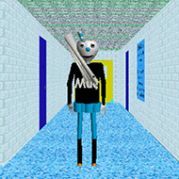
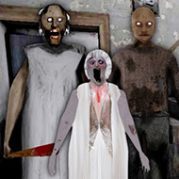
Dmod looks like a tiny, almost empty browser experiment but plays like a short horror piece that punishes impatience. There is very little on screen at first, which tricks many players into hurrying, and that hurry is exactly what the design is waiting for.
Small Space, Big Dread in Dmod
The setting is compact, and nearly everything worth noticing sits in plain view. The challenge is less about finding hidden rooms and more about noticing when something that was there a moment ago has changed. Players who treat each area like a still photograph to study get far more out of it than players who sprint through.
Sound does a lot of heavy lifting. Quiet ambience, distant noises and sudden silences shape the mood, and playing muted strips away most of the tension. Headphones in a dark room is the setup fans of this kind of micro-horror recommend.
A run is short enough to finish during a break, which is part of the appeal. The game is designed around one focused sitting rather than a long campaign.
Why Short Horror Splits Players
Micro-horror always draws two reactions. Some players love a piece that delivers one sharp idea and then stops, while others feel short length means not enough content. Both views come up constantly whenever games like this circulate.
The fair way to judge Dmod is by how well the mood builds during that brief window. When the atmosphere lands, the ending feels earned; when a player rushes, the same ending feels abrupt and confusing.
That gap explains why comment sections are full of people saying they understood far more on a second attempt. Knowing where to look turns a puzzling first run into a coherent little story.
Getting More From a Second Run
Replaying is where most of the value sits. On the second pass you know the layout, so attention shifts to details you skipped: objects that moved, text you ignored, sounds that only make sense once you know what follows.
Slow pace gives the atmosphere time to build. Sound on keeps the cues that hint at what is coming. Reading everything fills in the context the ending relies on.
Streamers who cover short horror often play this kind of game twice in a row on stream, and the second run is usually where viewers start pointing out the clues everyone missed the first time.
Setting Up the Right Conditions
Where and how you play changes this kind of game more than people expect. A bright room with notifications popping up drains the mood in seconds, while a darker room and full-screen mode let the quiet spaces feel properly oppressive.
Volume deserves attention too. Setting it a little higher than usual makes the subtle ambient layers audible, and those layers are what turn an empty corridor into an uneasy one.
Finally, give yourself an uninterrupted block of time. Pausing midway to check a phone resets the tension, and the ending relies on that tension having built steadily from the first minute.
Who Will Enjoy Dmod Most
Fans of atmospheric micro-horror, the kind built in a few rooms with a single central idea, are the natural audience. People who enjoy dissecting endings with friends will also find something to talk about afterwards.
Players chasing combat, upgrades or long progression will probably bounce off quickly. There is nothing to grind and no skill tree, just a space, a mood and a short story told through small changes.
Taken on its own terms, Dmod is a compact horror snack: play it in one sitting with headphones on, move slowly, read everything and give it a second run to see how much the details you skipped actually change the meaning.